What was the starting point for your contribution to your King Kong edition?
Collaboration is absolutely central to my practice. Both editions were created collaboratively—one with Brian and Mahube “Chommie” as I mentioned, and the other, Tools for Conviviality, with five creatives living on and off Senegal. That edition, in particular, was made alongside the Guinean–Beninese–Senegalese fashion collective Donkafele, who work through upcycling and circularity. Their focus is on how entrepreneurship, fashion, and creativity can enact change within West Africa. I fundamentally do not believe in the lone-genius myth. Race is relational. In Germany I am racialized as Middle Eastern, on the African continent I can access whiteness, so it would be deeply problematic to make work about a place or its people without working with them. Even in contexts like El Salvador, where I might be read differently while working, I am still not local. Anytime I am not local, it becomes ethically fraught to claim authorship over someone else’s experience. Photography, art, and documentary carry long histories of inherited power dynamics. Collaboration doesn’t erase these structures, but it can push against them, shift them, and make them visible.
How do you see this project expanding or challenging your ongoing investigation into diasporic aesthetics?
I’m very interested in how aesthetics migrate—how visual languages, subcultural signifiers, even national symbols, travel. You see this throughout my work. There are always references to diasporic neighbourhoods, but also reminders that these neighbourhoods originate somewhere. I remember while working on Tools for Conviviality someone told me, “I don’t like that you’re importing this Berlin or New York aesthetic into Senegal.” And I thought that was so racist—because it assumed that the Global South doesn’t shape Western aesthetics. When in fact, Senegalese or Gambian rappers in the UK are making grime; artists like Boo-ba move between spaces; culture circulates. The West and the global South are constructs that continually inform each other—they are not separate worlds.
In what ways does the digital space (like King Kong’s platform) influence how you construct or distribute your work?
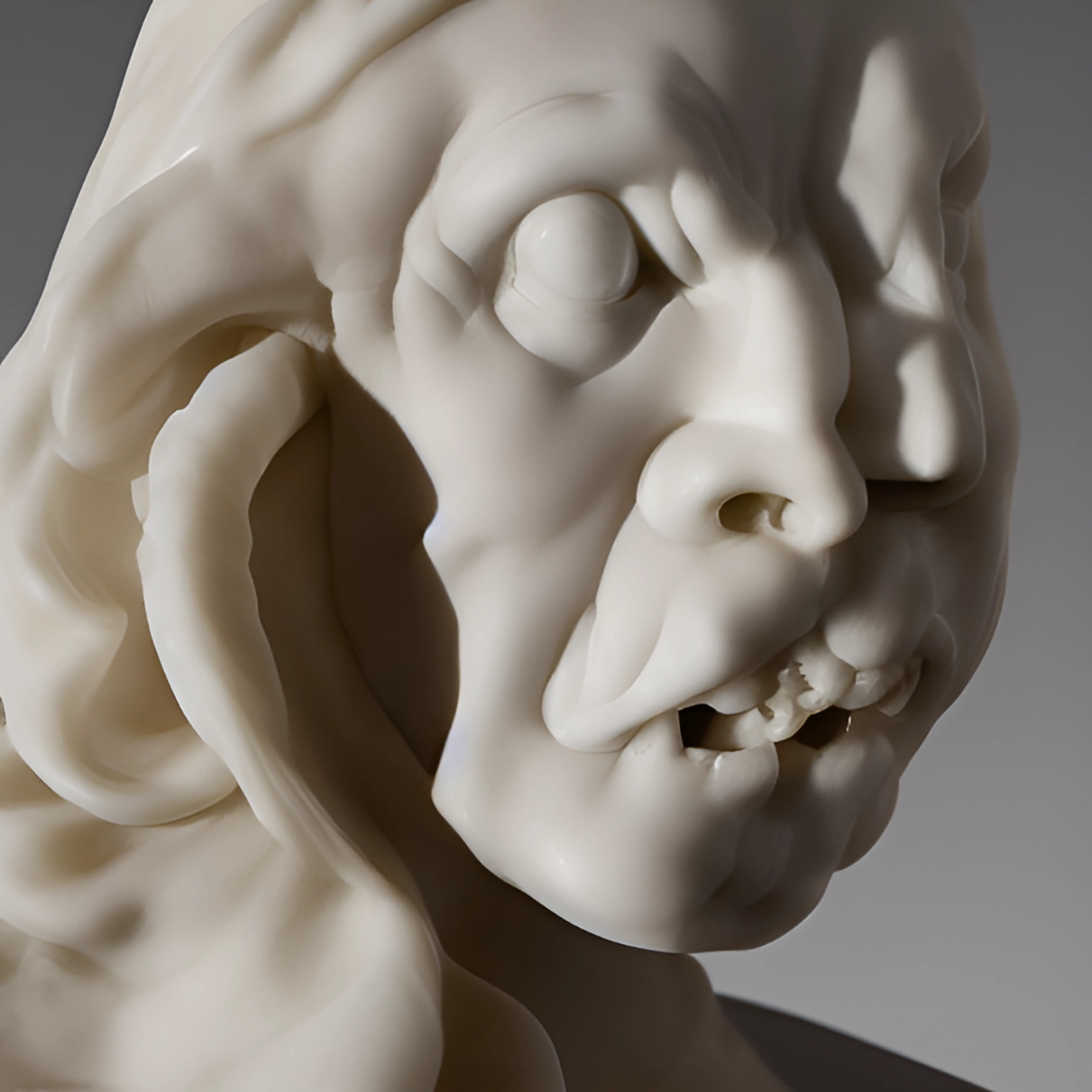
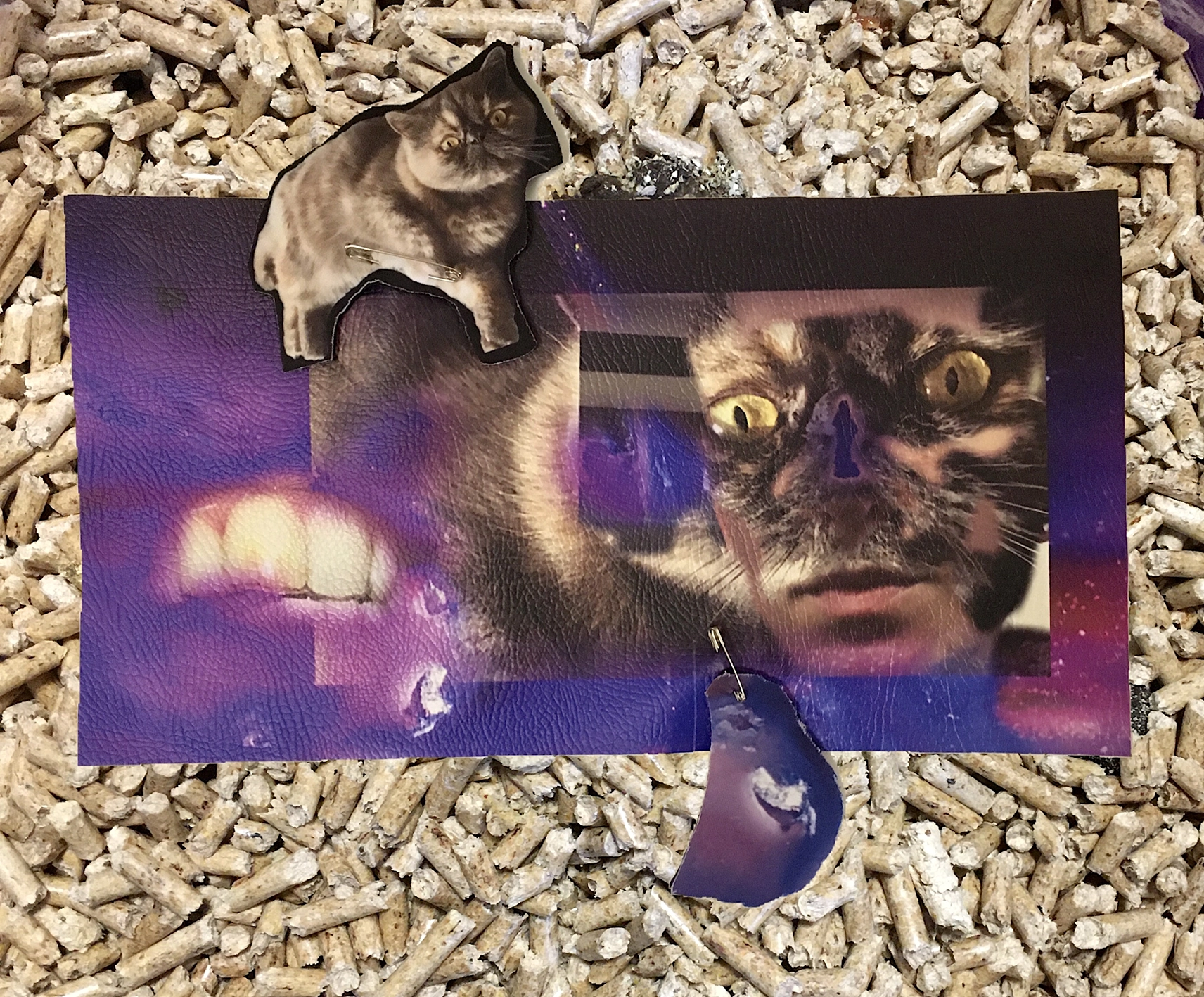
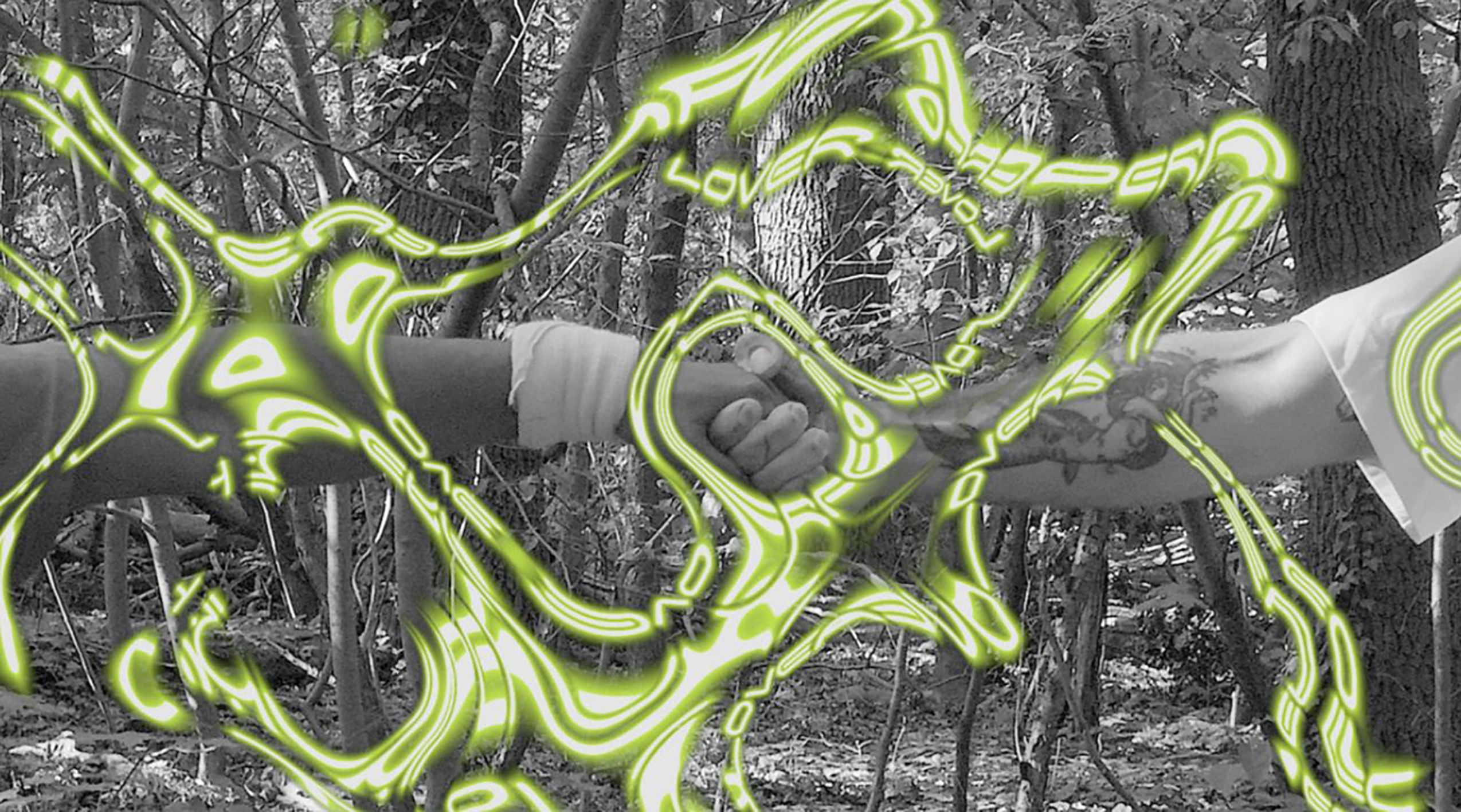
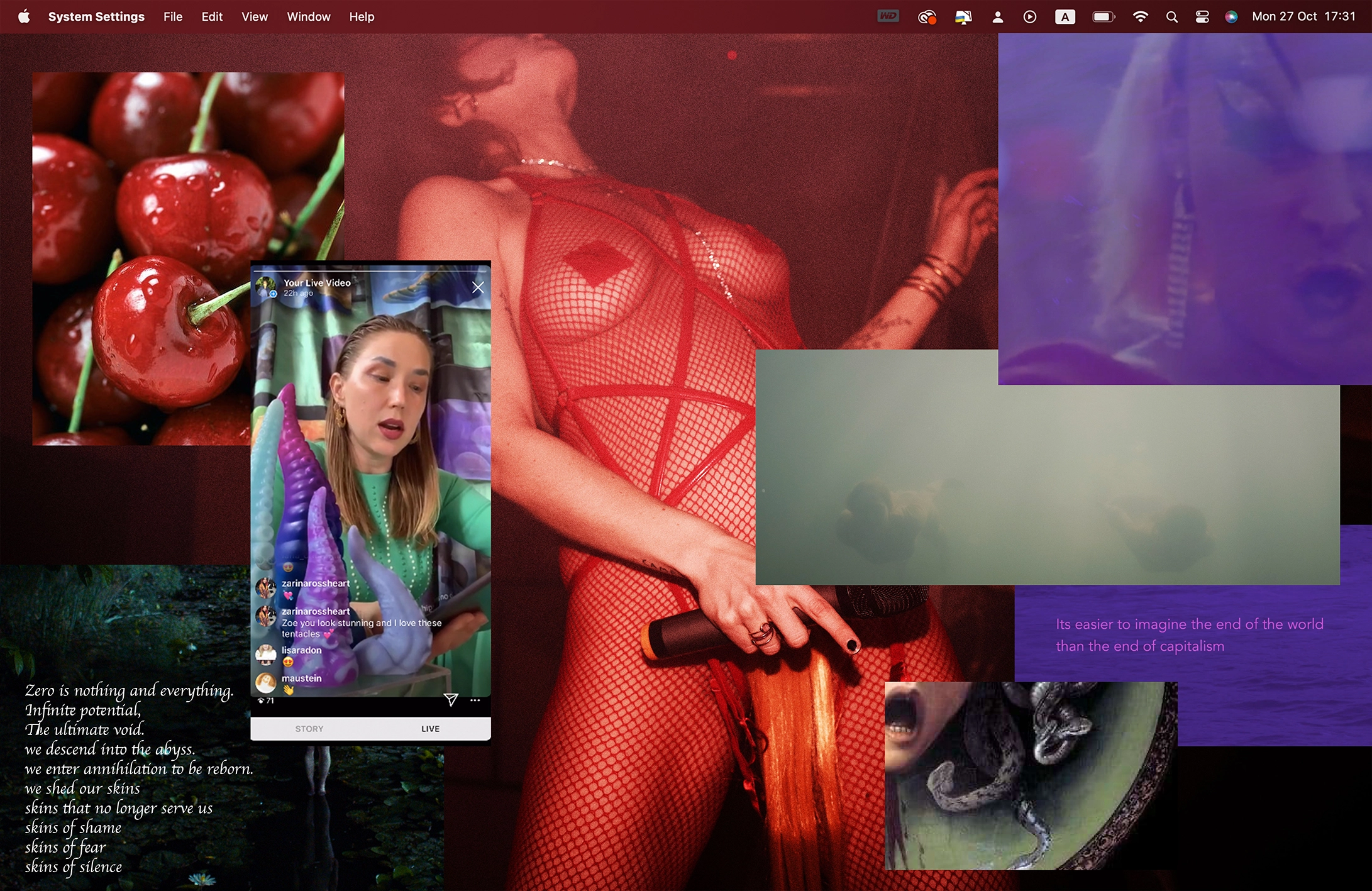
Digital space is my toolbox, my pirate ship, and my site of critique. I recycle heavily from the internet: screenshots, 3D stock plat-forms, digital marketplaces. I’m fascinated by the question of how objects are “traded” in virtual space—how digital infrastructure changes the meaning of exchange. And I’m equally interested in the human labour behind automation, the ecological costs of connectivity. How much water is a crypto transaction worth? These questions shape how the final physical work looks and behaves. I’m influenced by the aesthetics of screens—the colours, the hyper-saturated digital palette, the shapes that are difficult to reproduce physically. When I built this edition, I work best in the tension between control and chaos. I meticulously edit, then deliberately introduce glitches—pixels spilling into the wild—so that I’m in a sort of conversation with automation. There are almost seven years between the two works I’m remixing here, and sampling myself has been liberating. Like hip hop, I steal from the internet, but I also steal from my own archive. The works talk to each other; the bad bitches have fun together.
The visuals in your edition are rich with layered references—can you talk us through one of them?
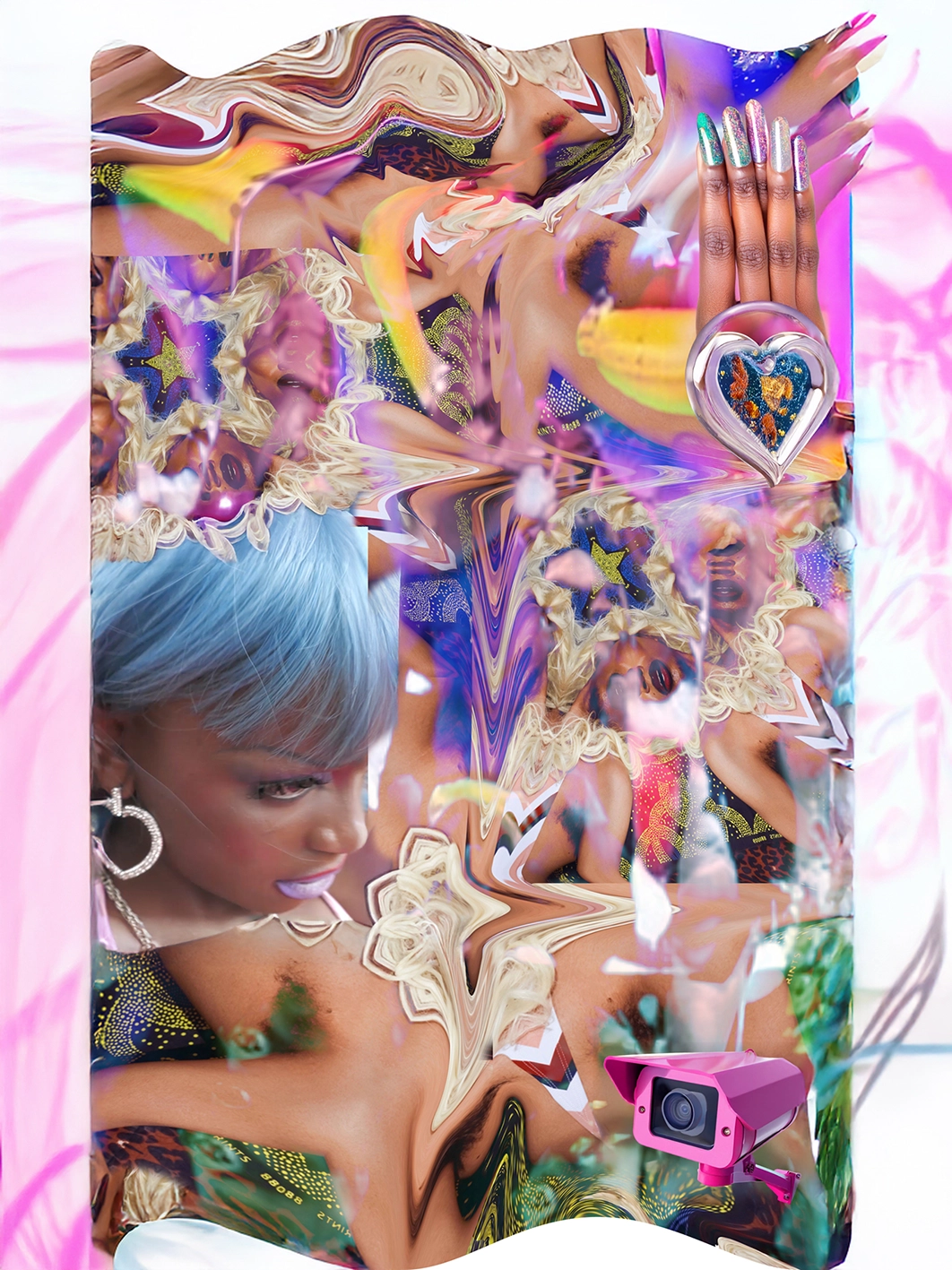
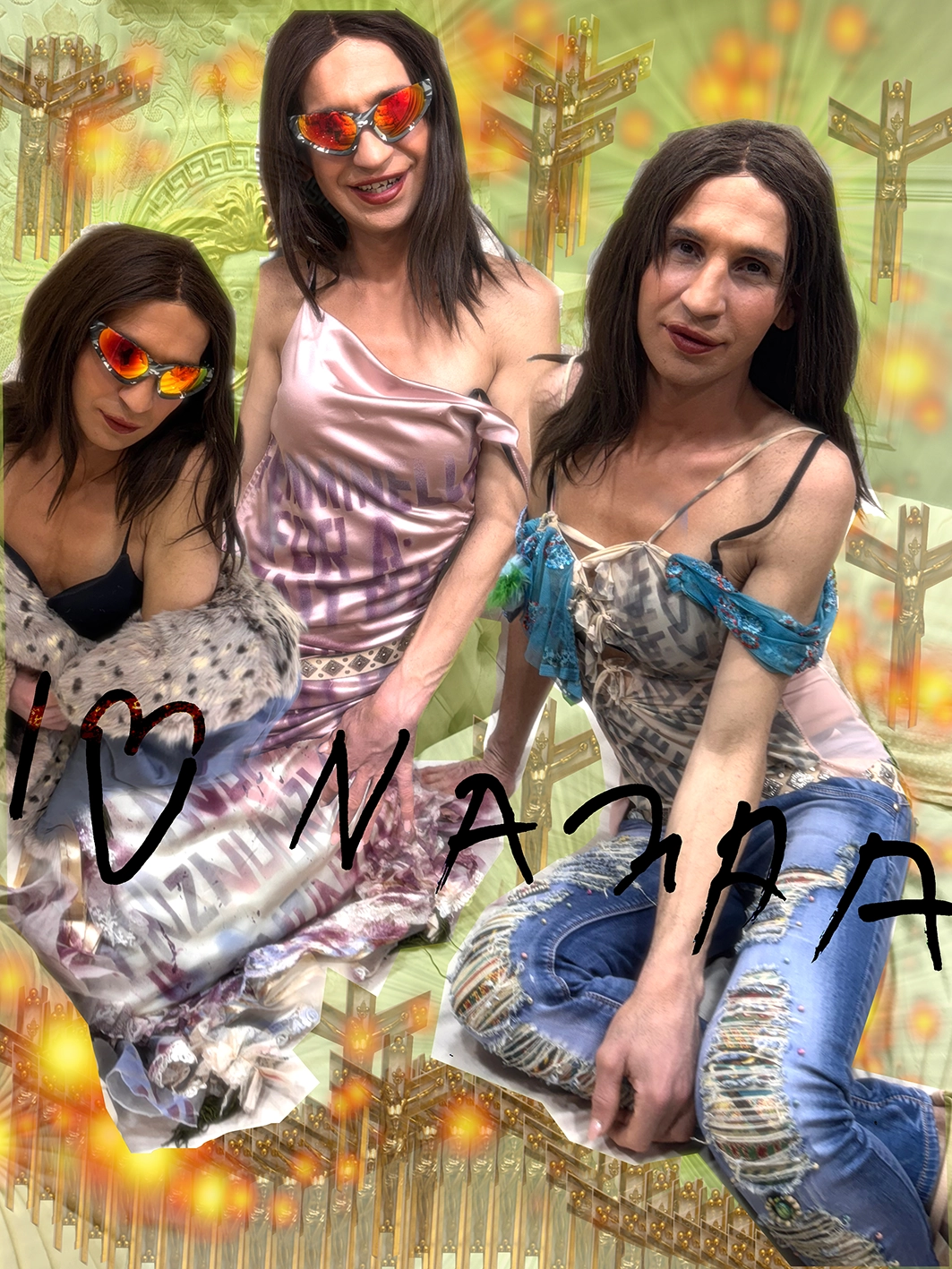
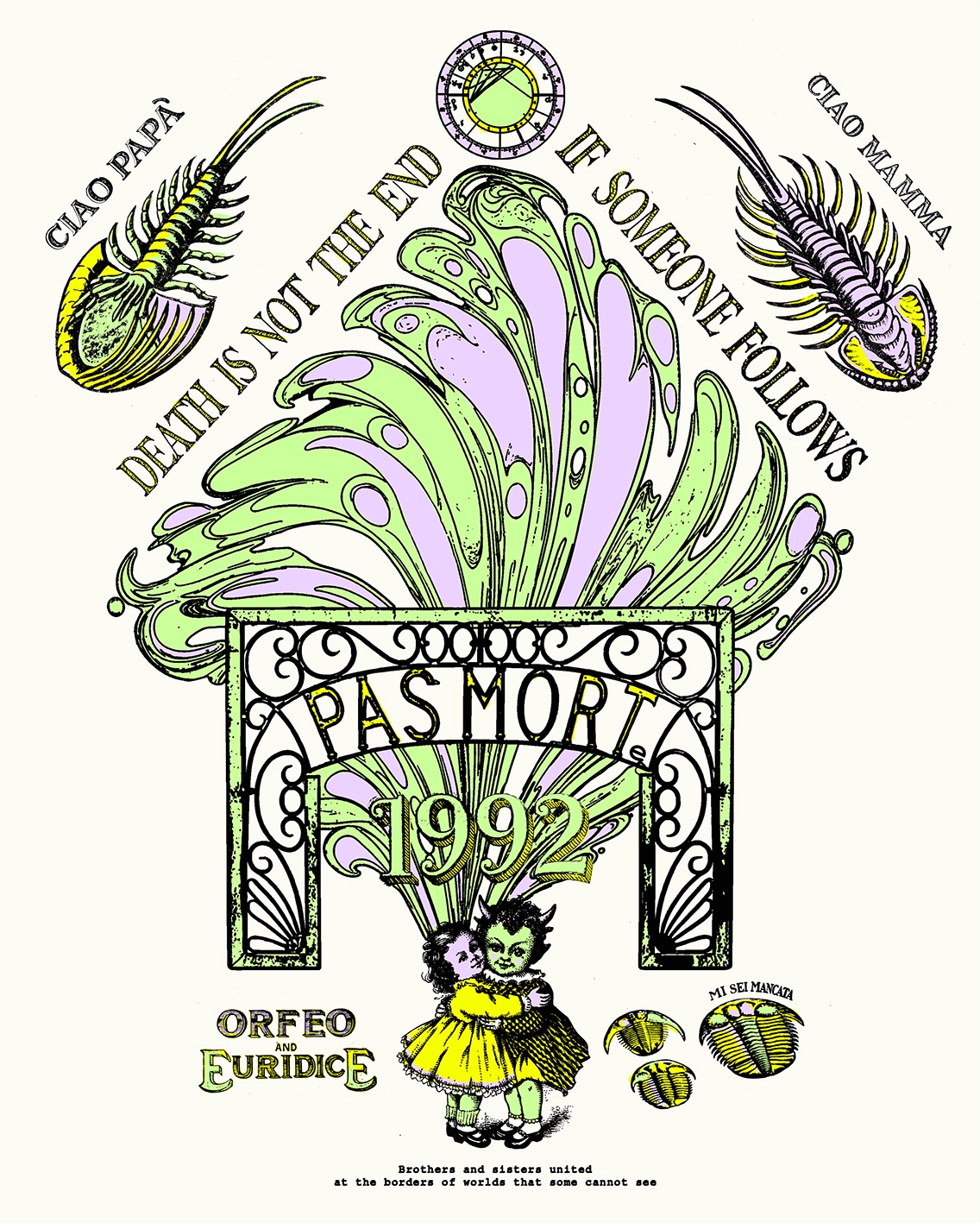
What interests me about King Kong Magazine is that it values aesthetics and the meaning behind them. Both of the works I’m showing—one from Chommie, one from Tools for Conviviality—examine how fashion intersects with geopolitics. In Tools for Conviviality, for example, you see fabrics that travelled from Europe to the African continent. I’m drawn to the “social life” of things; almost every garment we wear could hold a biography, revealing the global systems and power relations that shape it. One of the works is a collaboration with Johannesburg-born, South African queer artist Mahuba Diseko and Brian Monshiwa. It looks at how platform capitalism commodifies queer people. The pink CCTV camera tucked into acrylic nails and heart charms is cute, but also sinister—a nod to the ways queerness is surveilled, commodified, staged both IRL and online. It’s a wink and a warning. It plays with stereotypes to glitch, crush, and overpaint them—to show how they’re constructed.
What kind of cultural or technological mythologies were you engaging with here?
If this edition were a portal, it would lead to a 2045 pool party where a Pan-African AI has been trained on protest chants and drum and bass. People hanging out, having fun, planning to overthrow the big-tech bros next weekend. And if this edition had a soundtrack, it would be a ghetto-house edit of Public Enemy’s Fight the Power.
Collaboration seems central to your practice. Was this edition created solo or collectively?
Collaboration is embedded everywhere in my process. Even when I’m the one assembling the digital layers, the work is built from shared infrastructures, shared aesthetics, shared politics. Whether I’m drawing from Donkafele’s circular fashion practices or remixing earlier collaborations with Mahuba and Brian, the work is never authored by me alone. The labour, the politics, the aesthetics—they’re collective.
How do humour and irony function in this particular body of work?
Humour is one of my sharpest tools. Irony lets me expose the absurdity of stereotypes while also enjoying their aesthetic material. The pink CCTV camera is a perfect example: camp, cute, glamorous, and yet also deeply sinister. It’s humour as critique—camp as a weapon.
What stereotypes or dominant narratives are you trying to bend or break with this piece?
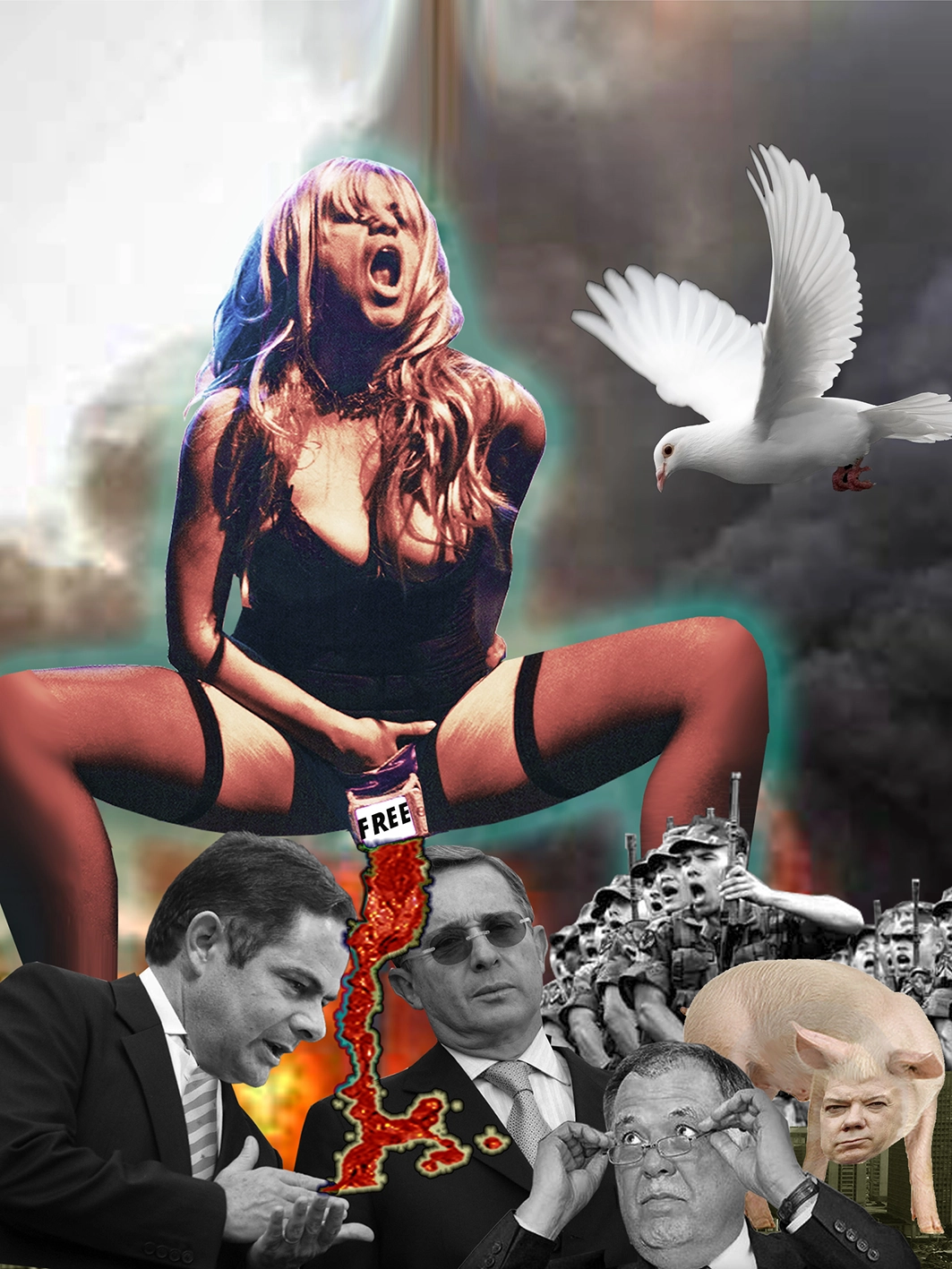
If I could break one dominant narrative, it would be the idea that digitality belongs to the West. I want to centre the Global South as sites of agency, invention, and global influence. I don’t believe Berlin is the centre of the world. I don’t believe New York is either. The world is multipolar—planetary—with multiple centres at once. There’s a myth that the internet, or Silicon Valley, is “woke,” that increased visibility on Netflix equals progress. But for marginalised groups, representation often still caters to heteronormative, white-supremacist clichés. Much of my work interrogates these stereotypes and participates in what the Negritude art historian Sir John Clarke called the “vindicationist tradition”—a foundational force in hip hop. It’s about taking a stereotype, inflating it, exaggerating it, playing with it, owning it, and in doing so, breaking it, taking the power away from it. German rap culture is based on that too and influenced me strongly.
What did you discover about your own process through making this edition?
Sampling myself across a long time period was thrilling. It reminded me that my archive is alive—something I can plunder, remix, and argue with. I discovered that I love working at the edge between control and entropy. That collaboration isn’t just a method but a politics. And that even when the work looks digital, its heartbeat is collective, embodied, planetary.
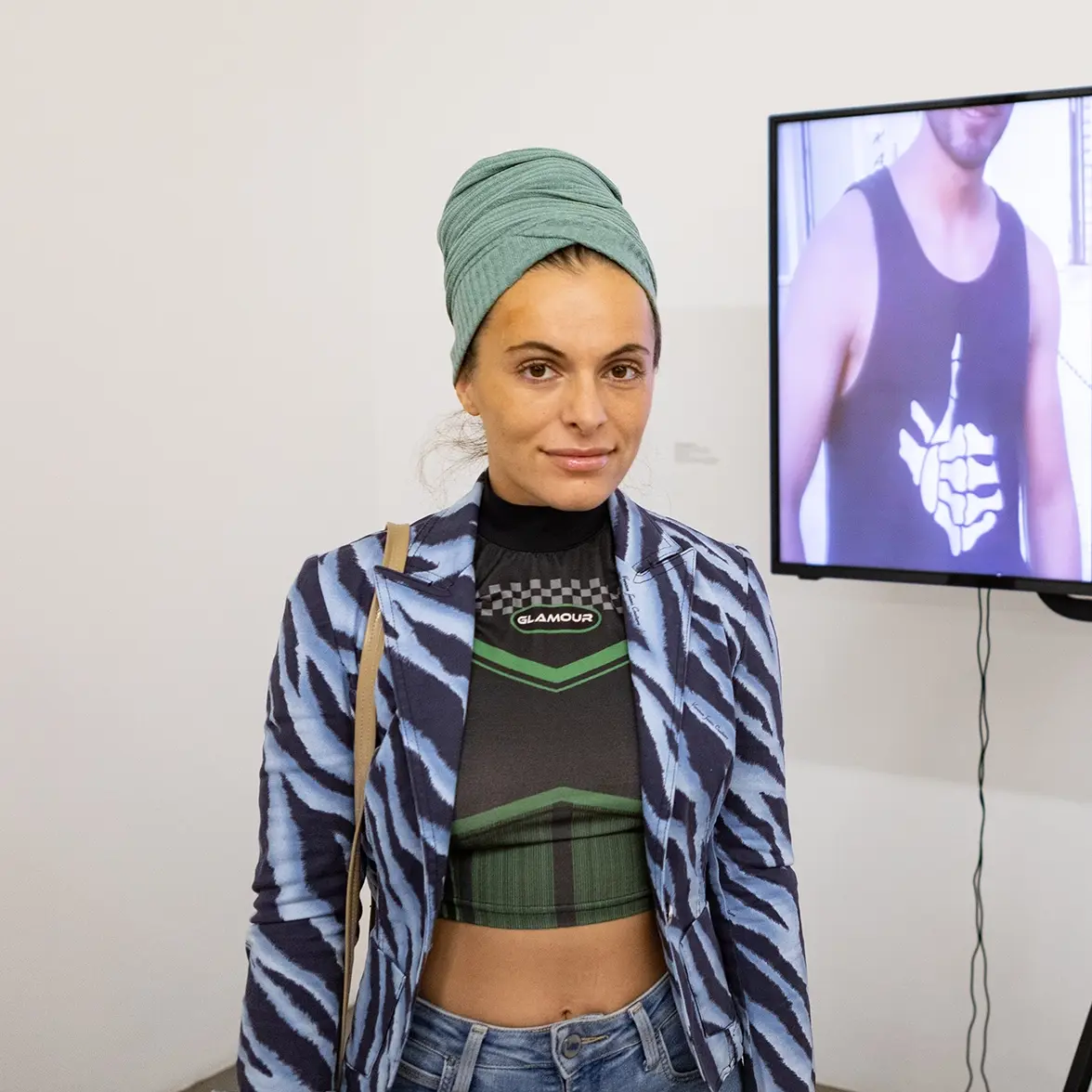
My practice is rooted in the fractures of a personal history: my father’s denied asylum in Germany, and my Albanian, Turkish, and Egyptian heritage, which set me moving back and forth between Albania and Germany from an early age. These displacements shaped not only my sense of belonging but also my desire to research the necropolitics and material culture of migration—how lives are regulated through documents, infrastructures, and images, and how communities carve spaces of resilience within those systems. Alongside this, I explore Islamic science fiction and world-building as speculative frameworks for imagining repair and futurity.
Through installation, photography, video, and textiles, I trace how technologies and objects embody these entanglements. A hijab becomes both ornament and political screen; a passport morphs into an architecture of exclusion; crypto-mythic sirens emerge to warn of digital economies that drain both resources and bodies. I often work collaboratively, building speculative ecologies that undo photographic power imbalances while emphasizing joy—where postcolonial solidarities and creolised aesthetics unfold as unstable but necessary futures.
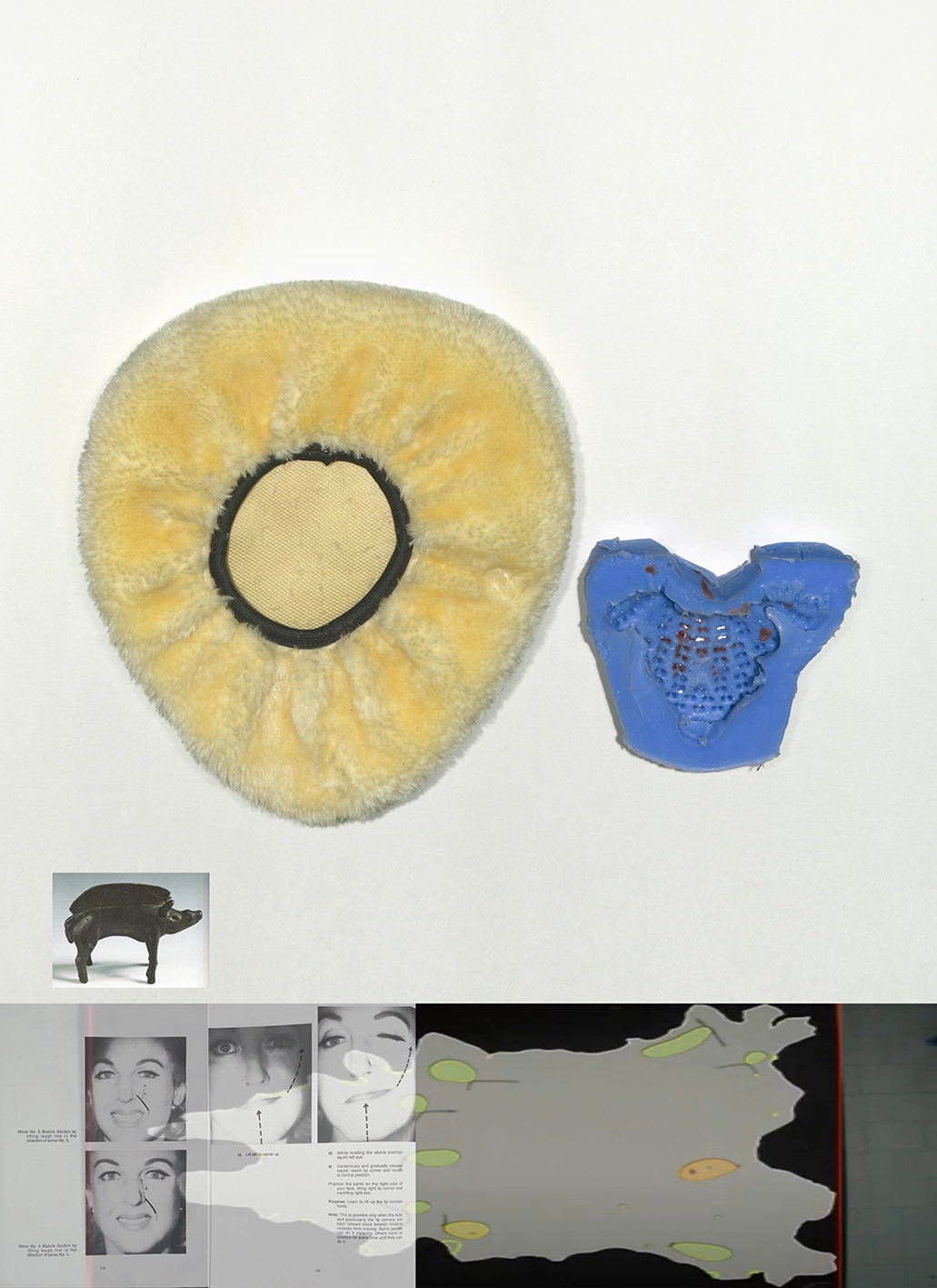
In my textile practice, fabric is never merely surface—it is memory, migration, and metadata woven into form. LAN cables, silicone, hijabs from Tirana and Berlin, or talismanic embroidery become interfaces of ritual, speculation, and kinship. By activating textiles as both sensual and insurgent, I connect diasporic economies, counterfeit cultures, and digital networks into woven ecologies of memory, survival, and imagination. I often combine materials that don’t ‘belong’ together—synthetic silks with silicone, embroidery threads with USB cables. These hybrids mirror diasporic realities: things patched, adapted, surviving. The materials themselves hold memory—silicone remembers heat, silk remembers touch, cables remember data transfer.
My textiles are rarely made alone. I collaborate with artisans, designers, scientists, other artists, musicians, dancers and informal economies—from counterfeit markets in Tirana, Dakar, Bogota or Istanbul. I believe in a world with many centres at once, even if I don’t have the power to unmake the world’s disruptions. What I can do is embrace failure along the way, and try—to practice solidarity and imagination within the contradictions I inhabit. These networks remind me that global circulation isn’t only capitalist extraction; it can also be collective care and aesthetic resistance. Each stitch, each fake logo, each hybrid material becomes an act of re-coding authorship. My assemblages host what I call speculative kinships: encounters between human, machine, and ancestral intelligence, between the spiritual and the non-animate world. A veil may become an abstract painting; a carpet becomes a motherboard; a talismanic patch becomes a data port.
I believe in critique as an act of love-making—and in the radical possibilities of spiritual coalition, performative ritual, neuroplasticity, collective unlearning, and constant renewal. These are attempts to imagine repair not as nostalgia but as a techno-spiritual practice of co-creation. Various printing methodologies merge with digital and physical painting; sculptural forms of photography unfold in textile assemblages and through generative AI, 3D prints, multiscreen, or 360° video installations combined with ceramics, silicone, and epoxy.
I call this approach “precarious assemblage”—a coming-together always close to falling apart: objects, images, and bodies leaning into one another without guarantee of permanence. It gestures toward the fragility of south–south trajectories and global dependencies, yet also toward the provisional possibilities of living otherwise.