What’s your relationship to nostalgia? Do you embrace it, resist it, or transform it?
Madonna of the distant queen of the rose garden,
Free from the fear of dissolution, from competitive insomnia, and from falsehood,
Give us today our daily holy bread, the sacred of the human.
The tenderness of the spikes,
The lines of an old notebook,
The lightness of the shells, the winter flooded with whiteness,
Give us the sisterhood of the revolution; it will not be the fooled utopia, a required conversion.
Free us from stinginess and from the perversion of faith,
From the dogma that does not know and does not see, that kills in the name of charity.
The evil that blinds it and carves the veins.
The gallows of good hangs it and spreads salt on the wounds
On the singularity of our lives.
Madonna of Montevergine,
Refuge of tears and smiles, bless our precarious paradises:
The flowers, the birds, the foam
Of the sea, and the brotherhood of dancing.
Protect the room of my transition,
Listen to Ciro Cascina’s song,
The begging of the cellar, cover our debts, give us our credits of joy and humanity.
You clandestine virgin, refugee of Palestine, sigh of the drowned,
Queen of fish and corals, free us from the sin of the continence of moderation,
Of abstinence.
Give us a sip of the most beautiful days,
Baptize us instead to the new world and the gardens of the unheard,
To the immeasurable,
To the vertigo of the impossible.
Give us the seasons that are missing,
The tired words, the white pages of the dark nights,
The fragrant springs of sex and truth against the fields of the loves we lost,
In the verses of the sea,
The holiness of the steps of those who seek the plot in them,
In the holes, in the cliffs, among the stones, in the nests of the hummingbirds.
Madonna of 100 sorrows and 1,000 pardons, we are here; welcome all our gifts:
The sobs and the colors of our uniqueness, you, mother, submitted, only for our freedom.
Poem: “Madonna del Roseto” by Ciro Cascina Ciretta
⸻
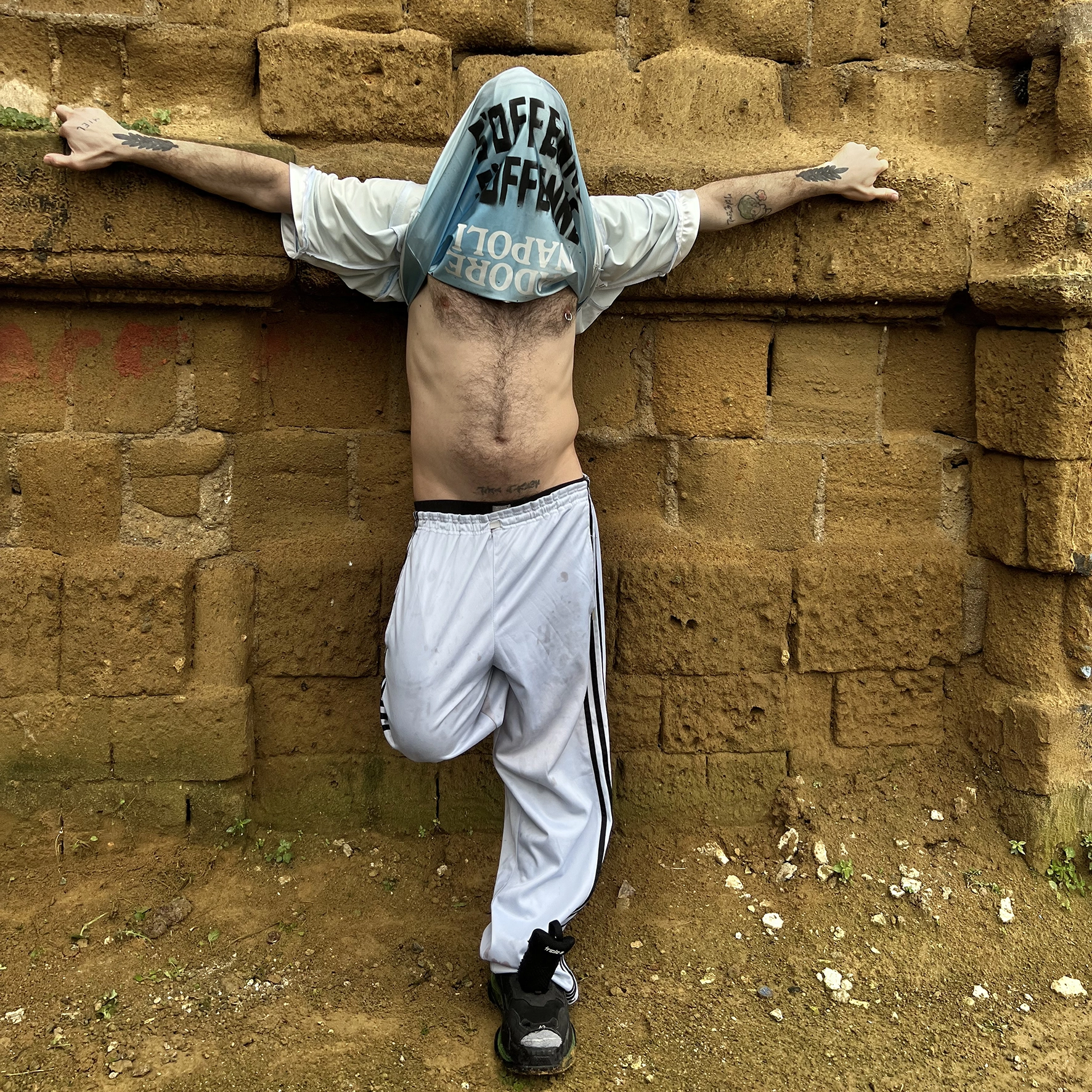
At this moment, my community in Naples and the artistic collective of which I am part — Korybass — are embracing the history of the past, while we search in the present for the temporal rupture into the future that we embody.
Like the Corybantes, the priests of the goddess of nature Cybele, called “the Black Mother” and worshiped on Mount Partenio at Montevergine, in our own places, we reclaim the traditions of pilgrimages and rituals. The sacrifice of genital castration was, for the Corybantes, the gift offered to the goddess Cybele; in us, this is re-signified as a symbolic act of identity liberation: we cut away various conditioning and pieces of the binary. The ancient Corybantes are a figure that, over time, embraced the “femminelle” of Naples. The femminelli are a modern third gender that has deep historical sacredness in Naples, like the Hijra in India, the Waria in Indonesia, the Native American Berdache, or the Tahitian Mahy. They are a gender protected by the small guardians of the neighborhoods of Naples.
The poem above is a gift from the ancient Femminelle of Naples, becoming a manifesto of dissidence where myth-making (mitopoiesis) challenges the media system, creating a threat to the “consensual reality” of technocratic capitalism. Through the gift we are receiving of ancient paper and oral ritual archives from the past, to us — new Femminelle souls of the resistance of Naples — a transformation is happening: from divinism to the perversion of faith, toward a contemporary alternative sublimation that forms a bond of sisterhood as a practice of collective conversion.
Is this work rooted in a particular place, relationship, or state of longing?
It is a particular place where castration from extreme, mortifying pleasure sublimates into a pure desire. The home of Laura La Divina, divine femminella, also the most viral “face star” of Neapolitan identity since 2000, and her prayer: “a facc è bell, e pure il corpo, combattimi” — “my face is beautiful, the body too, fight me.”
I remember, 20 years ago, the beginning of a relationship where we would meet at the Naples train station in a daily neurotic struggle. Today we meet in a temple, in Laura’s home, tended by a chosen mother, extremely decorated with lace and attention to detail, a dollhouse full of light under the ceiling but little sunlight, located among the alleys of the popular market of Naples. I, too, remain in a small neighborhood, continuing to decorate my days with lace and trims.
Thus, we rediscover a mutual narrative of reclaiming a desired intimacy, a resistance in the place where we find ourselves self-determined, through an exercise of mind and connection to people that is deeply empathetic, whether incorrect or right or wrong, and also theatrical, but marked by reciprocal recognition within the neighborhood — small, simple, and intimate.
What place does queerness occupy in your work, both aesthetically and politically?
My queerness is an artistic act that identifies error as a useful principle to break and activate new and alternative
methods beyond the classical commodification of art. I find it useful to employ artistic energy and intention in “the wrong way, in the wrong place.” I believe that perfect language or following classical institutional academic paths to self-determine as artists today is risky, as it empties content to align it with art understood as a “grand” institution and leads people to surrender.
At a certain point in my young life, I decided not to pursue my self-determination in more emancipated and safe places abroad, but instead to stop and simply know what was near me — “my neighbor,” to traverse my own neighborhood. To not be a dishwasher abroad, but to work as a laborer in my own place for a long time, underpaid and structured. After difficult years, I felt the emotion of recognizing myself in my neighborhood, transforming a truly struggling, difficult, homotransphobic place into a place of better acceptance, of mutual recognition. I found my own small space within the Neapolitan artistic production fabric. And now I continue to discover infinite artistic resources in my territory, with a community attentive to the rich artistic tradition of our places but with an eye toward production beyond our borders.
Starting from a direct childhood experience of being denied an education, dictated by a patriarchal judgment of family and territorial oppression, consisting of a ban on studying at an art and fashion school in my birthplace, Southern Italy. Can I float among the resources of a sea drained by the history of decentralization of economic and creative power in the South? The denied academic opportunity—and therefore the necessary condition for self-teaching and the creation of hyperstitions of artistic resilience—is a life performance, in difficult places, to initiate a hyperstition of the possible and the real.
Starting from different places in fashion and art, then, can the classist institution translate into a complex and human collective of new productive resources? An emotional disorder combines with a direct commitment to deconstructing the artist’s path and role as a personalist and self-celebratory trajectory, to allow for self-failure. Contemplating error, “in the wrong place in the wrong way,” a process of “self-castration” with extreme enjoyment enables new and transformed methods or languages that abolish classist and capitalist methods of production. Fabrics and sculptures are a loan to traverse collective spaces, tearing apart containers.
The bodies at stake in politics have initially undergone a rigid libidinal “education” that allows only segments of bandwidth to be left in the square, the agora, the market, where enjoyment is instantiated in a convertible way. Deterritorialization and experimental improvisation contemplate the idea of an inversion of the binary system of each of us—in the gain/loss model understood as a fibrillating, extremely fast switch, processors of anti-hauntology, of integrated circuits that intend change/inversion.
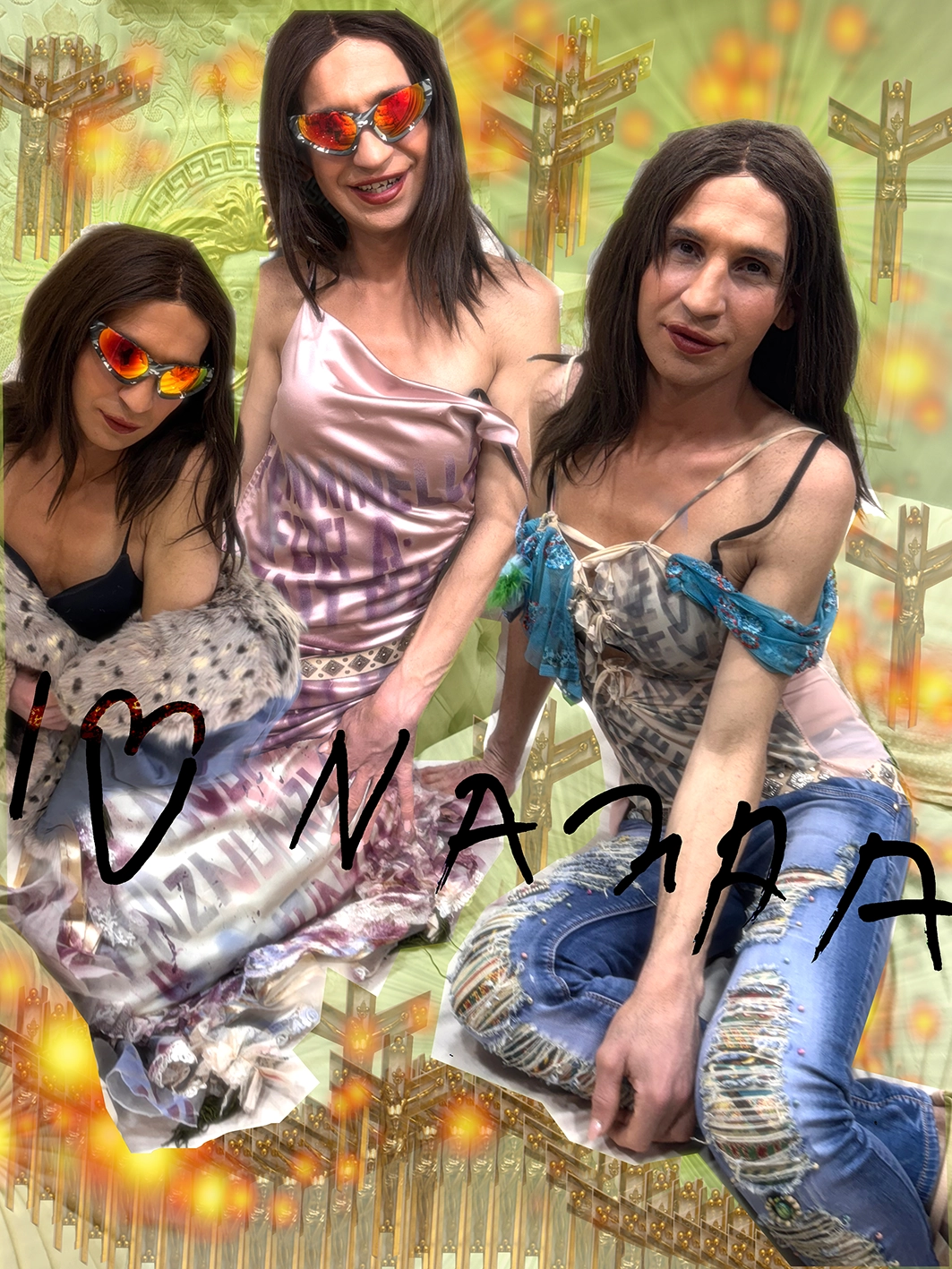
Need is what the instinctive charge that drives enjoyment becomes in a circumflex segment: the transformation of the architecture of places, of the bodies of words. The theater of Naples—the costumes I create—transforms into objects in a political demonstration, then becomes furnishings for a sex labyrinth in a sex club, then becomes art in a gallery, then becomes a classical ballet costume, and then becomes a wedding dress for a friend from the Forcella neighborhood. A transformation of words and bodies, all through fabrics.
Embroidery is obtained and recycled from community donations. All the “stars” who live or pass through my life and my city are the fabric I keep in my sewing room, in a circle, in company, like a small “Neapolitan presepe” workshop scene.
My place in Naples is folklore. The Neapolitan neomelodic aesthetic is a musical and cultural genre that has dominated the Neapolitan scene since the 1990s. It is characterized by locally inspired narratives that represent the experiences of marginalized individuals, referencing themes such as daily life, crime, romantic relationships, and economic hardship, through symbols, images, and practices that evoke my history.
Just as neomelodic narratives aim to illustrate, celebrate, and romanticize their protagonists—the plight of housewives, prisoners, prostitutes, and family members—from an internal and “indigenous” perspective, so I, having grown up and lived within the same patriarchal contexts alongside my “queer” community, personally rework and transmit the same codes and stylistic elements, reinterpreting them experimentally through a contemporary glam/punk/baroque aesthetic.
Just as neomelodic discos, festivals, and weddings are opportunities for enthusiasts to express their passion for this genre and connect with others, theaters, clubs, and art spaces become opportunities for artists to “queerize” and reconnect with their own heritage—questioning it, contaminating it, and transforming it into a new space of care, acceptance, and sharing.
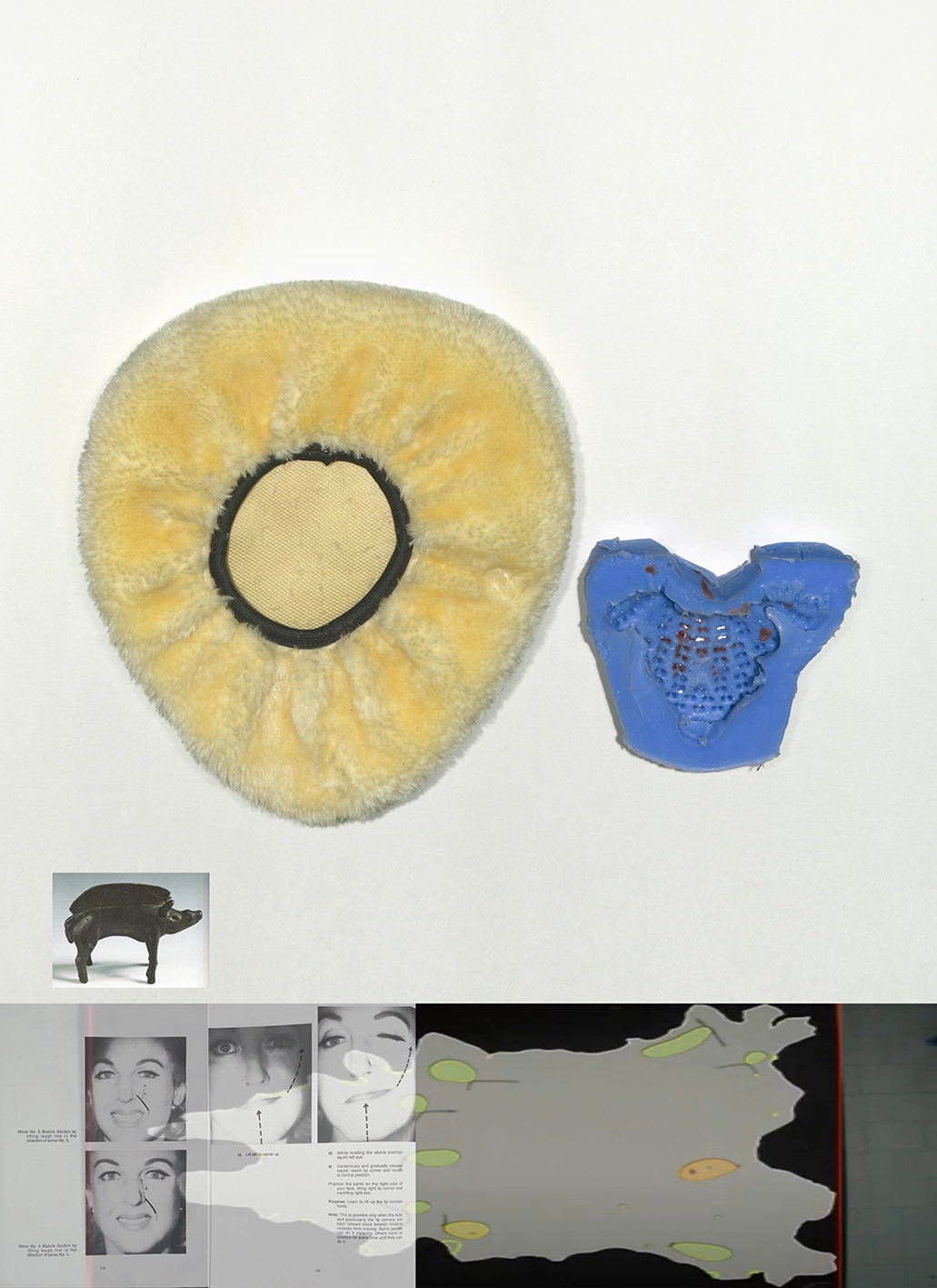
By breaking down containers and using fabric objects as an excuse to move through them, I create fabrics and prints of community identity.
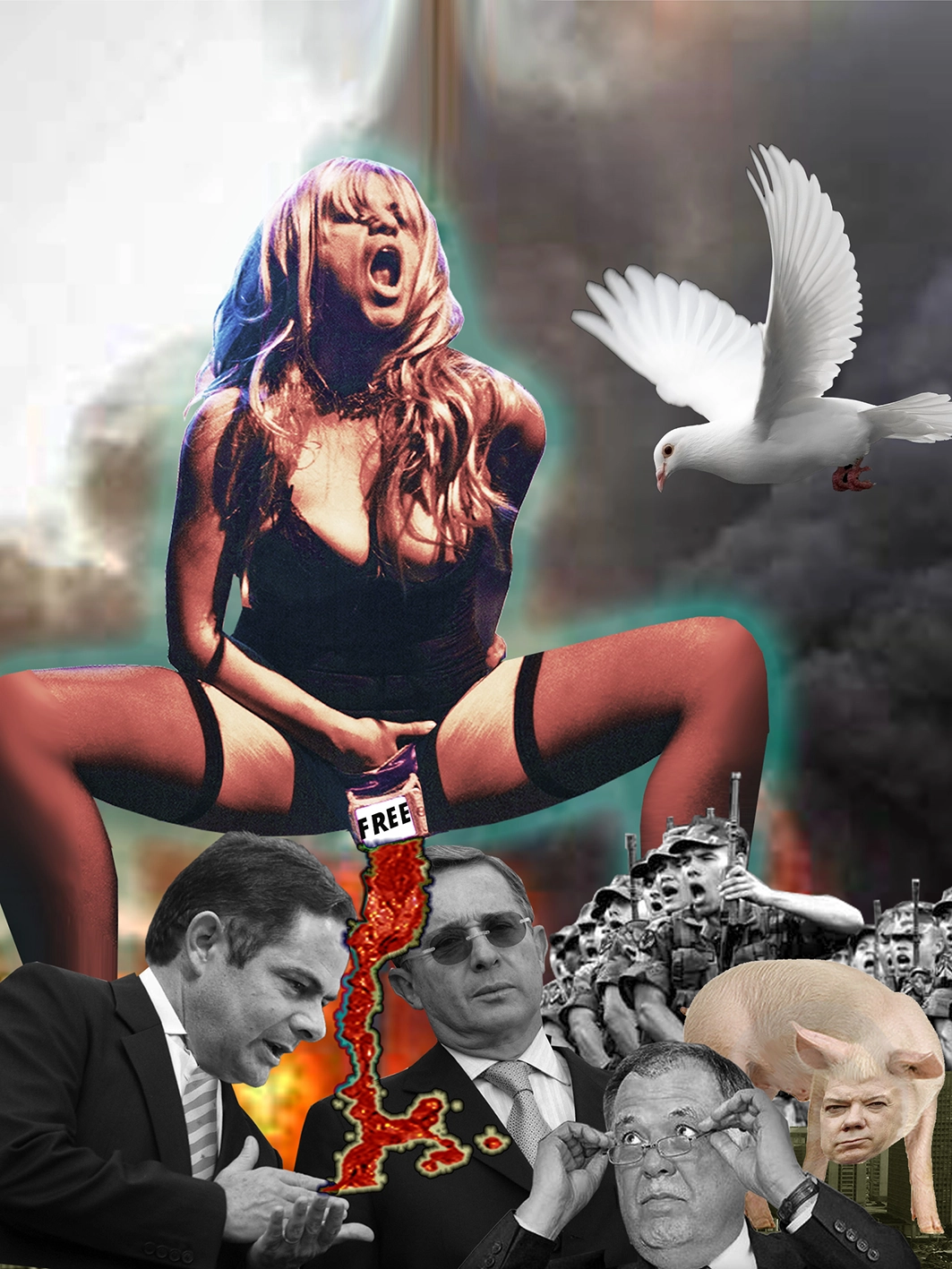
SISTERHOOD – KLEPTOCRACY – FASHION IS BINARY are some of the slogans that run through galleries, theaters, clubs, festivals, weddings, and various venues, both small and international.