kobramulata is a Brazil-born, Italy-based artist whose practice pulses with the energy of club culture, spoken word, and queer performance. Her art is deeply performative and rooted in sonic experimentation — she crafts multi-layered environments of resistance, expression, and collective joy.

Artist Statement

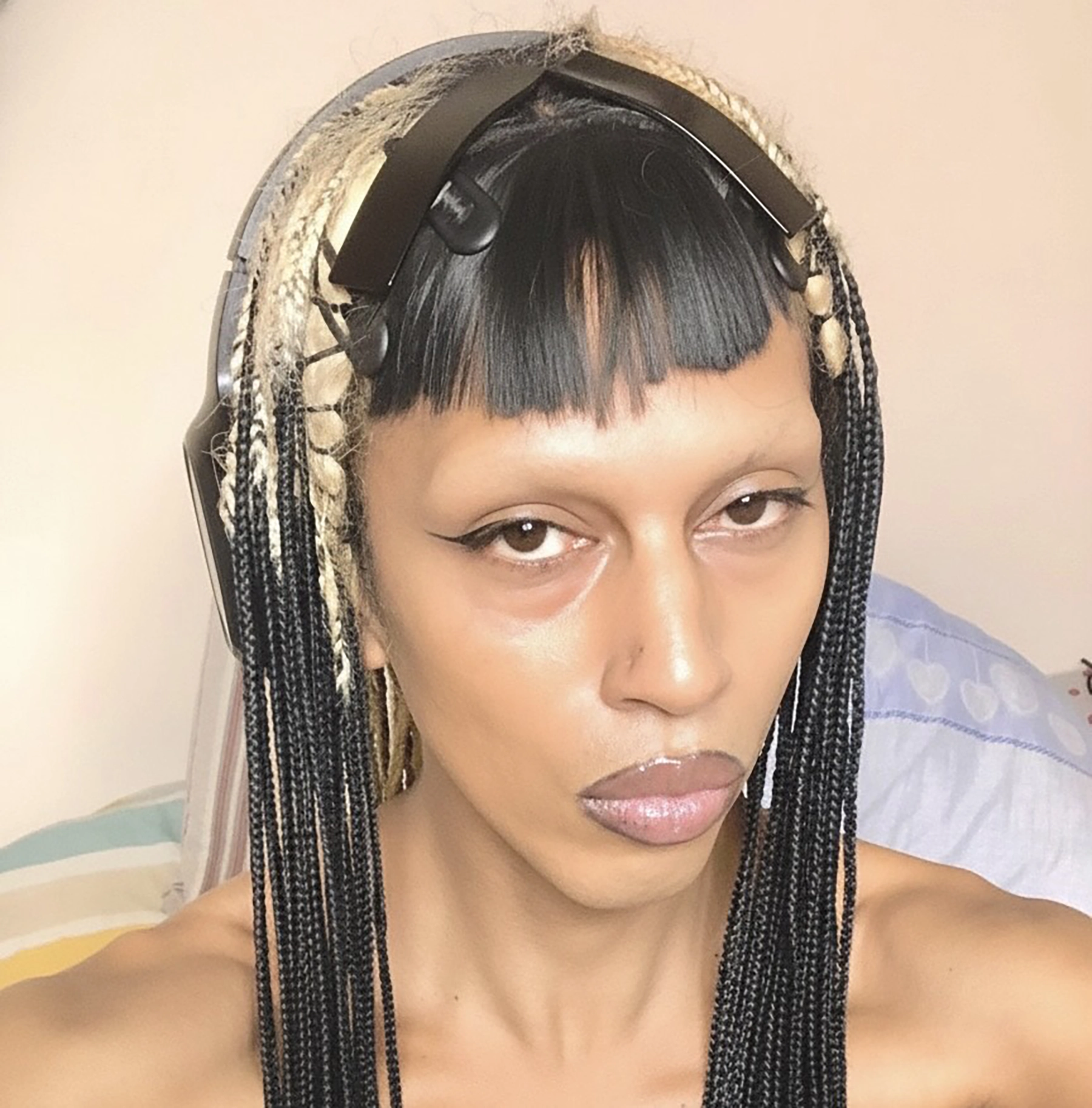
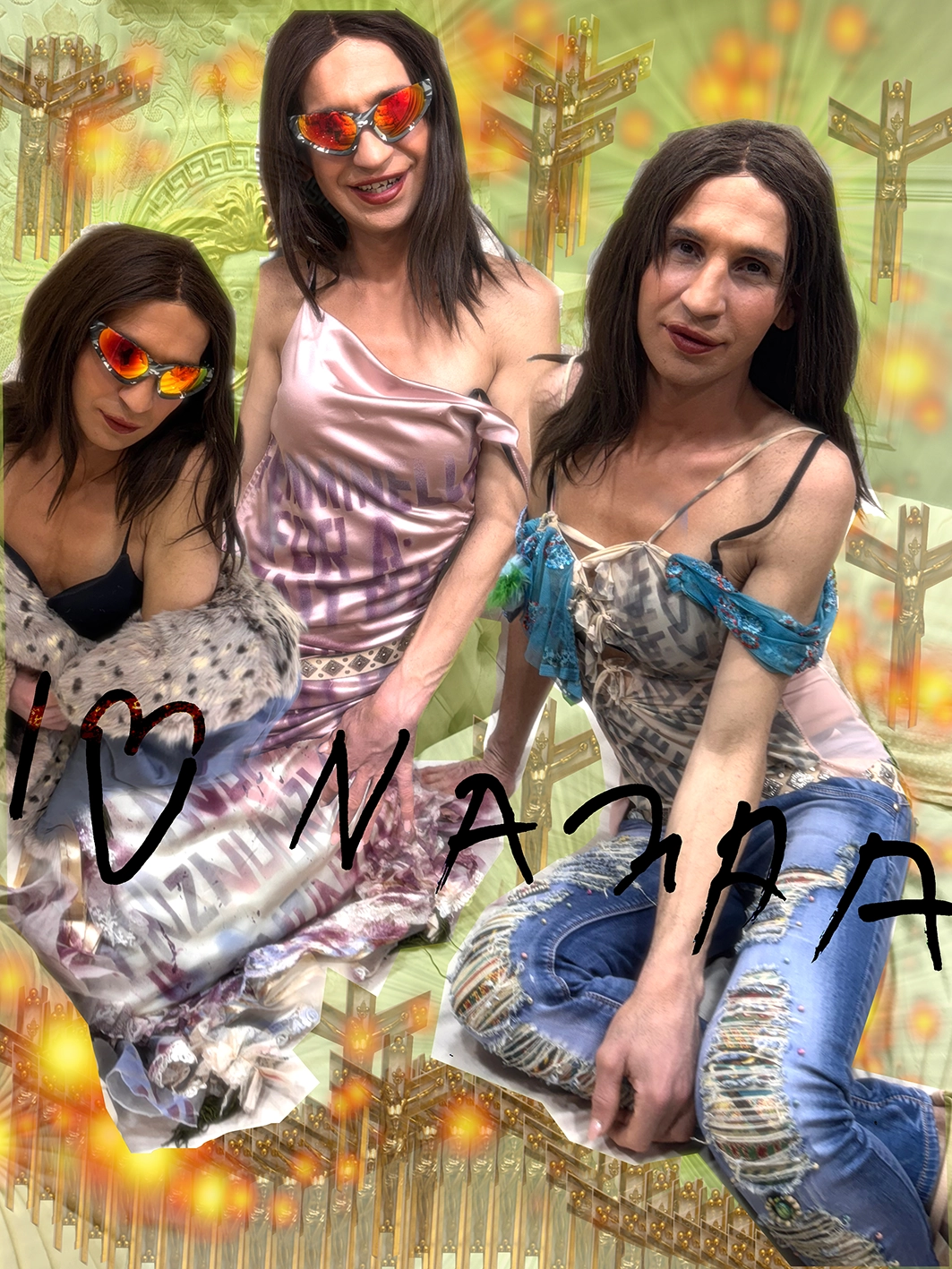
I wrote the phrase “Pretty like a (i) dea.”

Because of the contrast between the picture and the phrase itself, it plays between the self-empowerment that you develop along the path to embracing yourself and living your everyday life, and it says a Dea, meaning a goddess, and IDEA — that I’m a concept, I’m my own experiment during my life — and the idea is a pretty thing in general, because when you have an idea you often feel happy, but it’s also very subjective as a perception; it’s a line from my coming up single “immakuuulate” that talks about a personal path as a transgender artist.

Printing & Material

All editions are produced using professional pigment printing technology, ensuring exceptional colour depth, smooth tonal gradations, and long-lasting archival quality. This process delivers museum-standard digital fine art prints with outstanding sharpness, minimal colour shift, and consistent results across both colour and black & white works. Each print is produced under controlled professional conditions to ensure consistency, durability, and fidelity to the artist’s original work.

Each work is produced as a museum-quality fine art pigment print on Hahnemühle Photo Rag® Baryta, digitally signed by the artist and accompanied by a certificate of authenticity, and released in strictly limited editions.

All editions are printed on Hahnemühle Photo Rag® Baryta, one of the most renowned fine art papers in contemporary photographic and digital art practice. This exceptional 315 gsm, 100% cotton paper combines a delicate, tactile surface with a luminous baryta high-gloss finish, offering outstanding depth, precision, and tonal richness.

Widely used by artists, galleries, and museums, Photo Rag® Baryta meets the highest standards for archival fine art printing. The paper is acid-free, OBA-free, and museum-certified, ensuring long-term stability and preservation.

Each edition is produced with professional pigment inks, creating a work that is not only visually powerful, but also conceived as a lasting collectible object — materially, conceptually, and historically.

curated by

CURATOR

Lorenzo Xiques

Lorenzo Xiques: Practice and Context

Lorenzo Xiques (b. 1983, Caracas) is an independent curator operating from Naples, Italy. His practice is characterized by a rigorous inquiry at the intersection of contemporary art, performance studies, and critical social research. Xiques’ professional trajectory began following academic studies in architecture, an experience that informs his structural and spatial understanding of curatorial development. Fundamentally, his curatorial path is shaped by his personal history as an immigrant, arriving from Venezuela to Southern Italy at age eight.
This experience —starting from zero, learning a new language, and assimilating to a different culture without resources or family connections in the arts— is described as his punto di arrivo (point of arrival), profoundly affecting his perspective. From 2013 to 2017, Xiques held the position of Artistic Director at Quartiere Intelligente in Naples, where he established cultural programming focused on the discourse of sustainability and emergent urban practices. His institutional collaborations are significant, including ongoing work with museo Madre, a coordination role at Casa Morra Archivi d’Arte Contemporanea from 2017 to 2018, and for performance art within the Volcano Extravaganza festival (Fiorucci Art Trust) edition 2017 and 2019.
Since 2017, he has collaborated with Galleria Fonti in Naples, promoting young national and international artists focusing on a language and research that explores a poetic conceptualism.

Curatorial Thesis: The Outsider’s Path

As an “outsider” to the closed circuit of the artistic elite, Xiques found alternative paths that allowed him to shape his curatorial voice on his own terms, unburdened by tradition. He conceptualized Instagram as a digital sanctuary that enabled him to bypass geographical, social, and financial barriers, conducting research and building a global community where he could share and communicate art “how I want to.” This “virtual path” transformed professional frustration into an energetic catalyst, providing the possibility to “break through structural barriers.” Xiques’s research concentrates on the investigation of themes relating to gender, identity, and the complex reciprocity between advanced artistic experimentation and models of collective life.

Aesthetic Refusal and Embodied Knowledge

The artists selected for the King Kong Editions collection are united by a shared commitment to creating work that is a direct extension of their personal and political realities. Xiques champions artists who refuse rigid formalism and are often conventionally considered “ugly” for their richness and authenticity. This stance directly challenges the long Italian tradition of arte povera, minimalism, and conceptualism. At the core of this curatorial conceit is the idea that the work is not theoretical but an expression of embodied knowledge, diasporic, and queer methodologies. The artists and their work are “testaments to alternative narratives” and “new imaginaries” that blend the past, present, and future. Recognizing that “contemporary art is a Western language,” Xiques is interested in artists who negotiate the paradox of translating their heritage into a contemporary art code. Like the “diasporic rat” metaphor he cites, the work operates as an imboscata(ambush)—disrupting established art geographies and hierarchies from the edges.

Art as a Gift, Not a Trophy

For Xiques, this Editions project, which includes works by his close friends and collaborators, is not only a natural curatorial fit but also a powerful solution to the inaccessibility he has faced. The collaboration seeks to create tactile bridges between his virtual community and the intimate space of the home. The artists were asked to offer a work that “you would love to gift to a friend,” shifting the relationship from ownership and status to one of personal connection and shared values. Xiques is thinking of the passionate art lover who can’t afford galleries but can, through this project, “buy an art print and have it in their house, be in company with it and feel part of a community.” This collaboration demands active participation, asserting that “There is no space for a neutral artist anymore.” The works are not theoretical or housed “in a vacuum,” but are “our lived experience,” representing an ongoing practice of building a more inclusive, meaningful art ecosystem.


ARTIST

Kobramulata

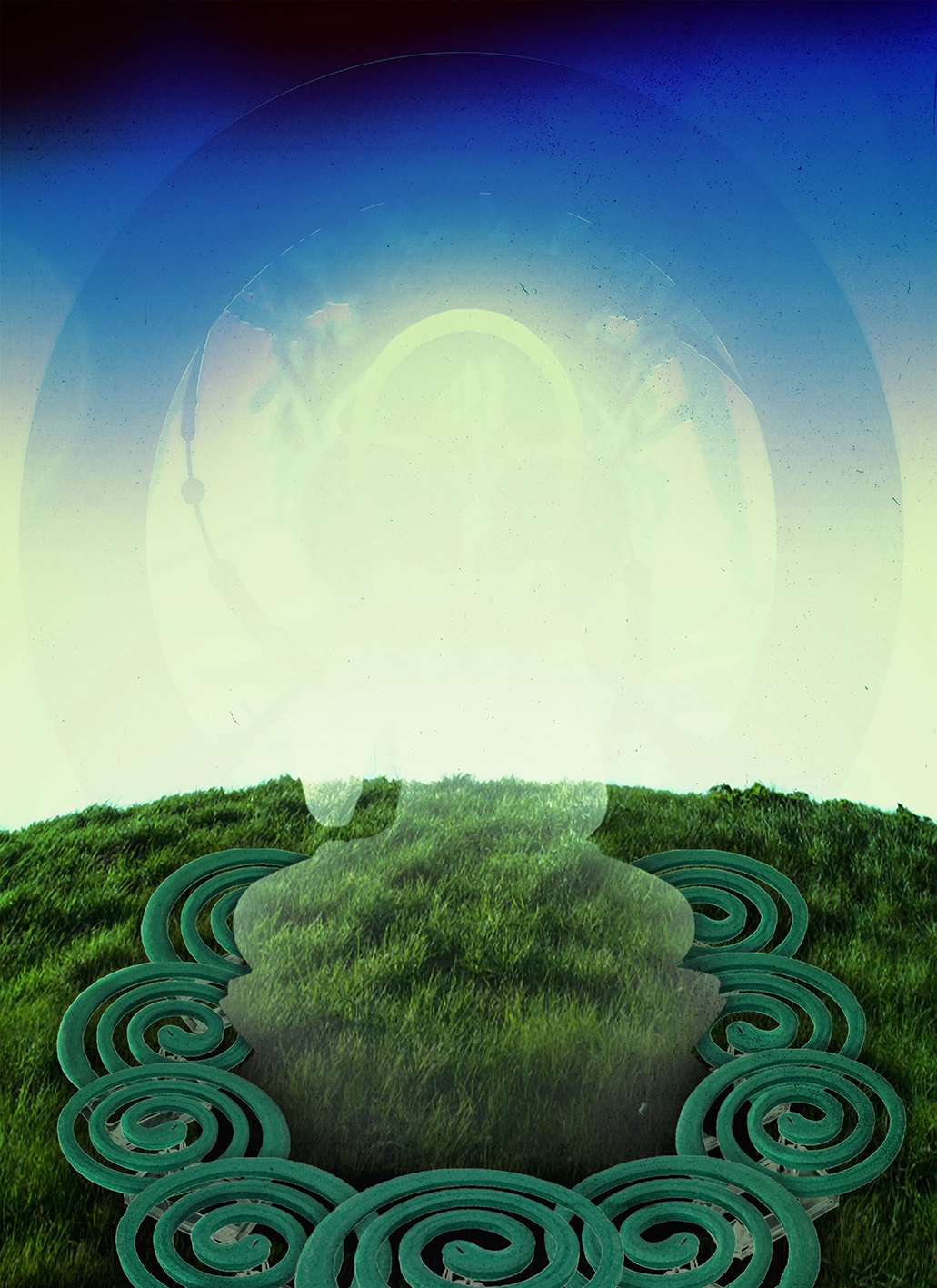
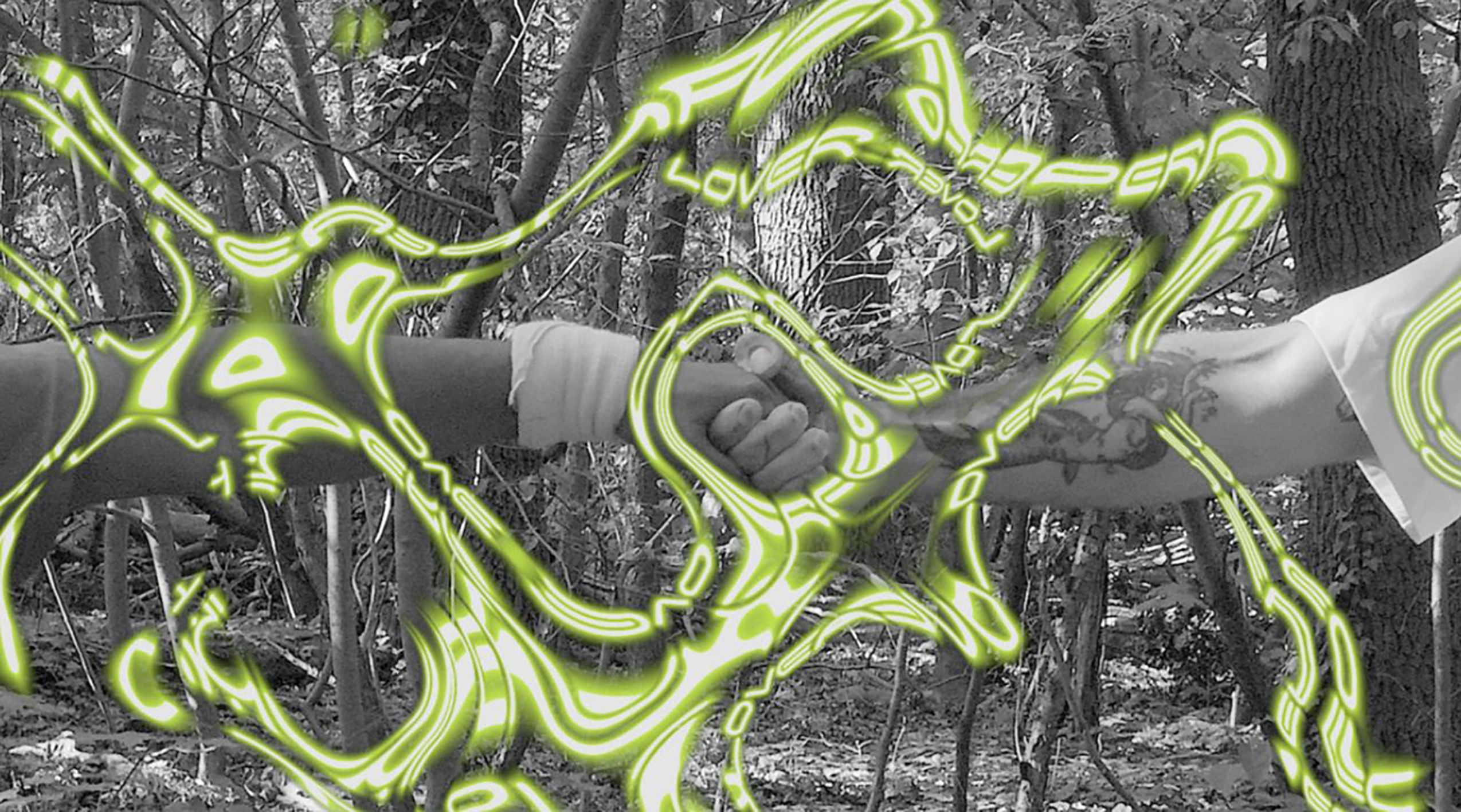
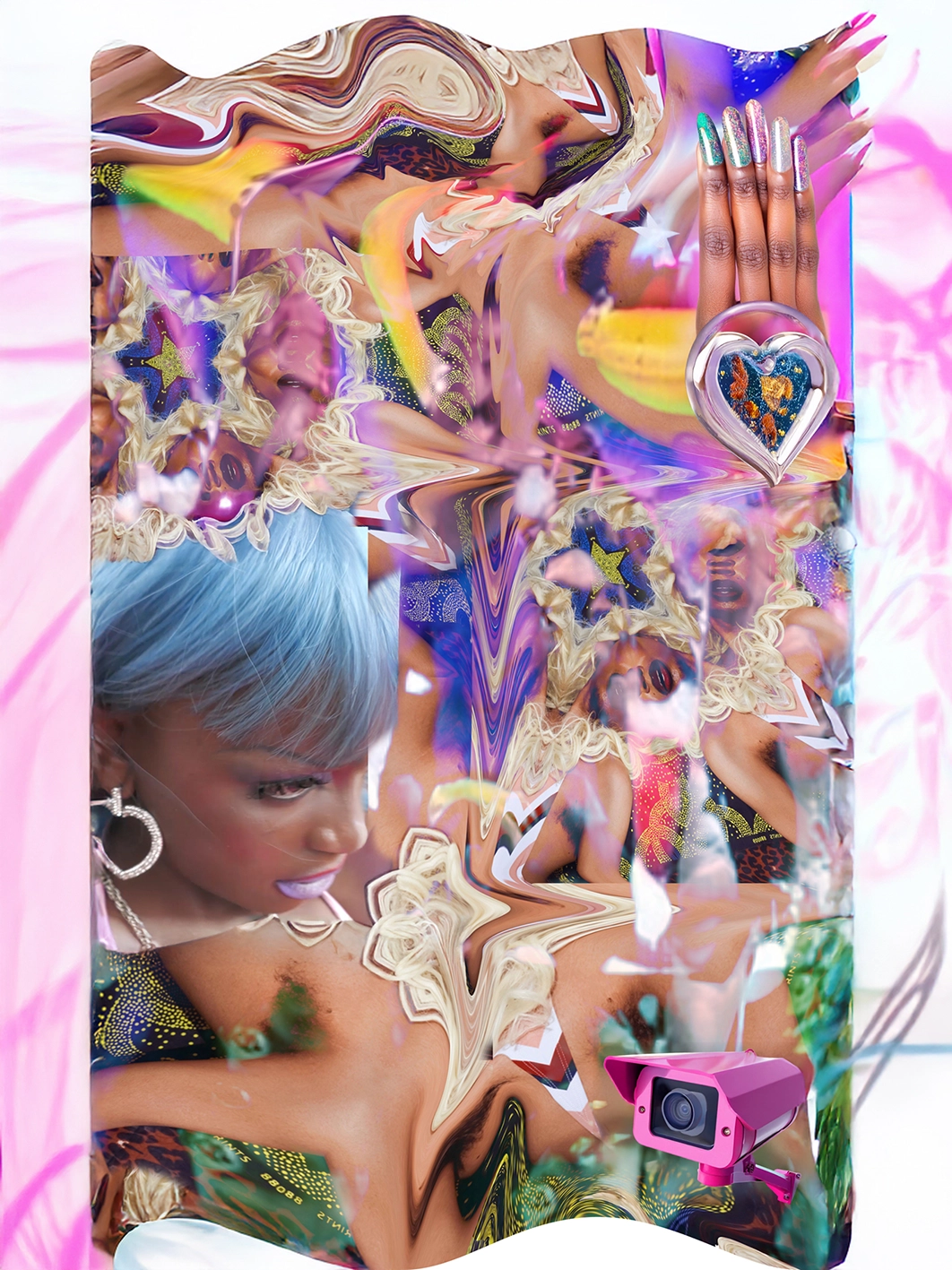
If this picture will lead us to a portal, where would it lead us to?

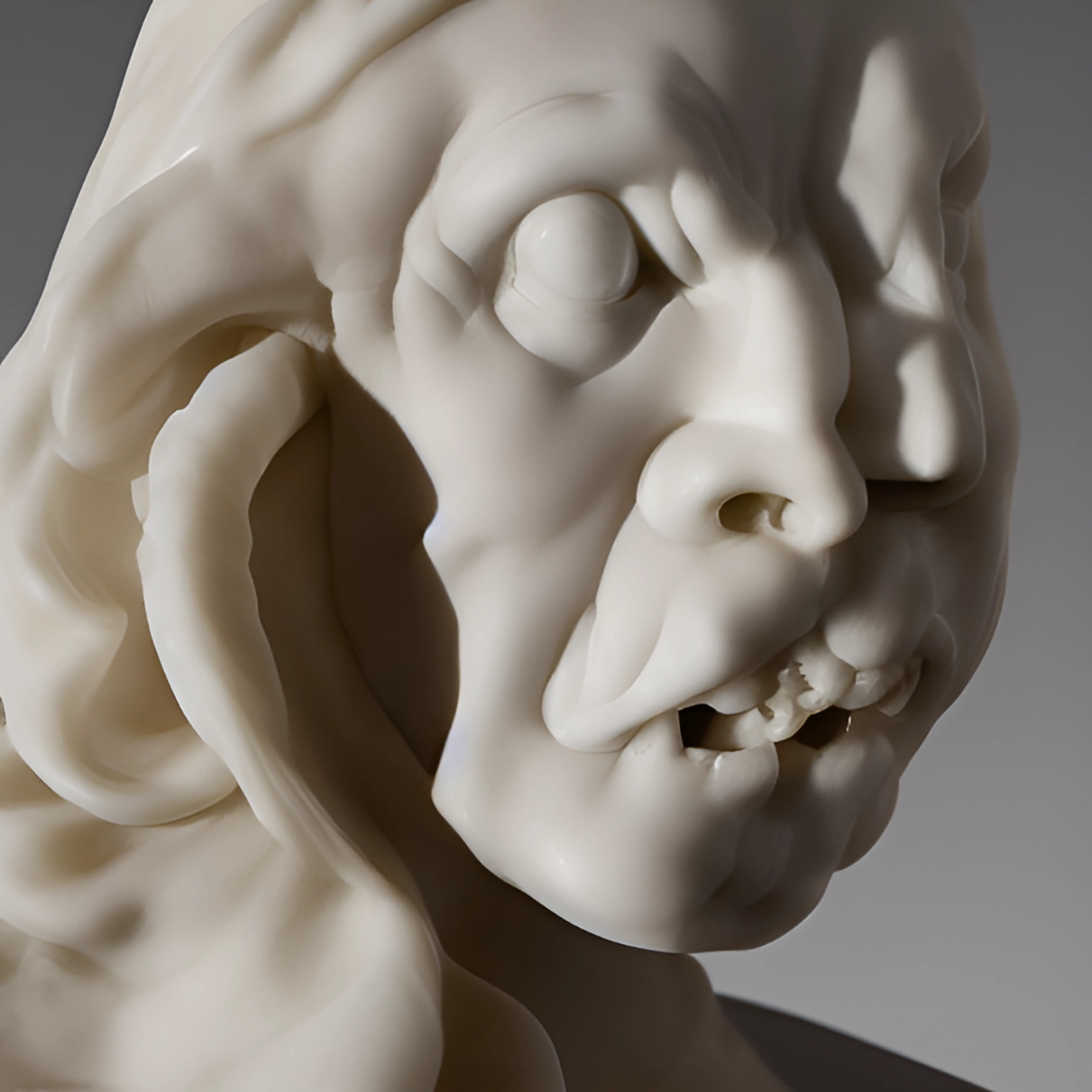
This picture will definitely lead us to a portal of self-discovery, so in both inner and outer space of ourselves, something abstract but also not. Better yet, to a semi-physical portal connected to the throat chakra mainly, so to the need of communication, self-expression, and personal truth.

Can you explain to us the process you went through that led you to this picture?

The process I went through to create this picture was mind-trouble-free. I was flowing and just following my fingers’ instincts (LOL), literally typing in the AI app as detailed as I could to create something that really represented what I had in my mind but in an unexpected or unusual way. I really wanted to be as precise as possible. In fact, the following picture is the “Final Product or the Final Evolution” of other pictures that came out during the creative process. As I said before, the process was pretty fluid, but I think the most challenging part was understanding first how to communicate with the AI app, also because I’m not really into AI-ish stuff, so it took a bit to connect myself to it. But as soon as I understood how to do it, it was really a blast tho!

What was the idea behind this picture?

This picture was created because I needed the cover art of my track Dolll, which talks about my transition journey from the more peculiar things to the common ones, passing through spiritual and mystical things, ending in a more explicit and sensual way. The tone overall is really cartoonish. I wanted something that was really connected to the theme and to the song’s lyrics but at the same time a little unusual, as I said before, something that would be a sort of undefined creature but at the same time carrying some traces of canonic memories because of this semi-elastic marble-like skin. You would never think about a dolll with these appearances. I wanted to go outside of the stereotype of what a transgender girl should look like in this patriarchal binary society, because each one of us goes on a different journey and it’s so beautiful and immense and full of different types of beauty, and I guess I hit the target. I wanted a face because the face, in general, is the main body part we have to communicate—not only through the mouth but also through facial expressions, the eyes with visual contact, and so on.

What is the connection between your music and your visuals, and how does it work during the process?

Most of the time, when I work, I start off with an idea, and this idea represents the whole project. By saying this, I mean the music, the visuals, looks, scenarios, and so on. That is also the reason why when I do something, everything is connected, because the vision or the download most of the time comes as a full package, and then I start to “divide” everything, but it’s just a symbolic or metaphorical division, because in reality everything starts from the main root/vessel. Sometimes the process changes, and it happens that visuals come to me first, and then from that image or scenario that I visualize, the lyrics of a song come out. I really think it depends on how the external/internal stimuli hit me mentally. But one thing is certain: without one, there wouldn’t be the other. It’s like a symbiosis.

How do your south-american origins influence your artistic work?

I think there isn’t a specific thing that connects my south-american origins to my art because it is already in my DNA. It’s within me. In fact, the work that I do is more like introspective digging inside myself to reach those parts. Many times people told me that my art reminds them of something Latino or more specifically Brazilian, and the fact that when I create I’m not thinking specifically about my origins, but it comes out anyway, is proof that I have them inside of me. When it’s needed, it just comes out, and it’s something that spreads naturally in the creative artistic process. I think my roots are the special extra flavors in whatever I do, and they consciously and unconsciously influence the way I live my life, think, communicate my work, and so on.

How come you, as an Italo-Brazilian citizen, choose to write your songs in English?

When I was little, I grew up listening, as a reflex, to my mum’s music: Brazilian Funk, Reggaeton, Bachata, Forró, Salsa, and others. But back then, as I was growing up and developing a more specific and personal music taste, I began to listen mostly to USA/UK music. That’s the reason why I write my songs in English, because all of those years influenced my brain so much that it just comes way easier for me to write in English than in Italian, which is my main language. I’m not saying that I don’t have to take my time, though—it’s always a second language because I don’t live in an English-speaking country or city. I guess it’s because of the habit of listening mostly to English music throughout the years until now. Sometimes my immigrant POV, whose country has been colonized too, takes over. I cannot lie that it lowkey triggers me because I partially know English language’s history and that England has been the biggest colonizer back in the days, which is why it is still a universal language. But I just focus on the “positive” side of it, which is the most spoken language around the globe, and I can use it as a tool to reach more people and create connections. Every now and then, I also write in Portuguese and Spanish too.

If this picture were a spell, what would it summon?

I think it would definitely summon the true ancestral initial form of ourselves—a sort of “mirror creature,” because it would be the “same” person that’s casting it, but untouched by society or whatever we know in our human world: unshaped, unconscious, and a semi-beastly wild and free inner creature.

BIOGRAPHY

Born overseas in Brazil and grown up in Italy, kobramulata is an independent multidisciplinary transgender artist who has lived between Milan, Florence, and Naples. She expresses herself throughout different arts, but mainly with her music; she mixes clubby slicky vibes with some bubbly energy and mystical sounds, contrasting different languages in her lyricism. She’s collaborated with underground producers; her first single hexxx was produced by LIPSLICK, followed by Trixxx, Seeegah, Dolll, and Babado, produced and in collaboration with Nikitawolf. During her live performances, she often wears hand-sewn clothing pieces that she designs and create by herself as a form of a further way of communication. She has performed at notable underground venues and events across Italy, including Combo Club in Florence for Astrofluid, Saffo Queerfest in Rome, Fluorescenze in Vicenza, Cassero in Bologna, Eterotropie in Florence, Hot Queers in Rimini, Queer Festival in Naples, Argo in Venice, and in the YAG Garage Art Space, with a mixture of body performance initially ending in a live singing performance. She likes to embrace every form of art at her disposal to make it a tool of communication for her personal expression and political representation of herself.