What systems of control are you critiquing or mimicking in this work?
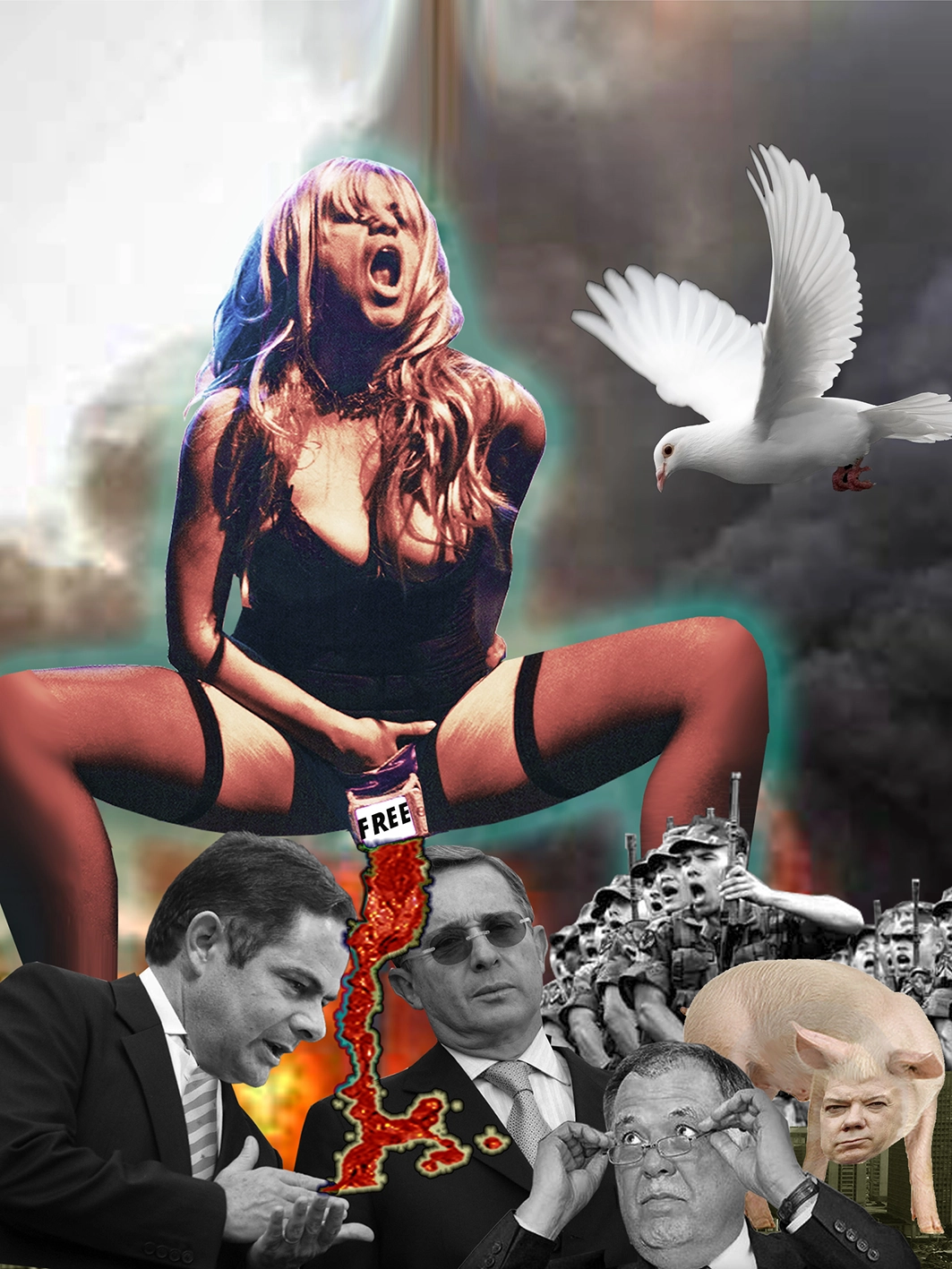
In the image, three characters appear who, at that moment, were very important figures in Colombian politics: two of them are Vargas Lleras and Santos. They are sons of the aristocracy of former Colombian presidents; they belong to families with great historical and political power. Meanwhile, Uribe, from a family linked to drug trafficking, is an important figure who represents, in my opinion, genocide, state terrorism, and paramilitarism. He is a character who has always attracted me in some way; he has not inspired sympathy in me, and I have spent several years in activism against him. I am primarily an anti-Uribista person; I consider Uribismo to be a harmful current for Colombia—a type of thinking and politics that, in some way, has been present in the country for years.
In the image, there is a square filled with gray pigeons; La Fulminante stands above them, and a pigeon releases some kind of acid or corrosive material onto the heads of these figures. The idea is to show rejection toward them, almost like “shitting on their faces,” while the Government Palace appears in flames in the background.
The message of the image is to criticize or destroy this elitist, white, Colombian patriarchy, implicated in human rights violations and in a mafia of corruption. This group of people has remained in power for decades, controlling the country and its politics. The intention of the image is to point this out, to express my anger, and to reflect my activism against these structures.
Is this piece more of an attack, a seduction, or an infiltration?
That piece is an attack. I would like it to be considered an act of disrespect, but not as a display of boldness—rather, as a lack of respect toward people whom many hold in high regard or even fear. These are figures who have inspired that reaction for different reasons: not only because they are heirs to an aristocracy, to those elites, because they are men and wealthy, but also because they are responsible for, and complicit in, serious crimes.
Above all, this applies to what Uribe represents, and also to Juan Manuel Santos. Santos was Minister of Defense at the time of the so-called “false positives.” Not everyone may be familiar with this, but it was a systematic massacre of young people from low-income backgrounds. These young men were deceived with false promises of employment and were then murdered in order to inflate combat kill statistics during the period when Uribe was president, roughly between 2004 and 2010. It was a real massacre, in which more than 6,402 young civilians were killed by the Army.
Uribe and Santos were, let’s say, a team: president and minister of defense at that time. There is another figure who is not at the same level, the eternal candidate Germán Vargas Lleras, who has never been president but is also a politician belonging to that stale oligarchy and whom I consider part of the same system. However, he is not the same as the other two; he occupies a third place.
At that particular moment, there were also political debates underway, and these works are linked to a specific historical context. Things have changed when viewed from a broader historical perspective. We are no longer in the same moment as before. Today, figures like Uribe and those sectors of power are in a kind of decline, in a situation very different from that of past decades. It is not that I am defending that image, but rather that, with the historical changes we have experienced in recent years—the advance of feminisms, left-wing movements, and the media—the way reality is perceived has been profoundly transformed.
In the past, there was far greater control over public opinion and the circulation of information. That has changed, and these figures are now being judged symbolically; they no longer represent what they once did. However, historically, it cannot be denied that these people were treated as if they deserved castles or monuments in plazas like Plaza de Bolívar, as if they were warlords.
For this reason, the image of decapitated figures functions as a kind of symbolic punishment—a punishment they will probably never receive in real terms. It is an attack on the symbolic level against figures who have been relevant—and deeply problematic—in the history of Colombia.
What role does discomfort play in the viewer’s experience?
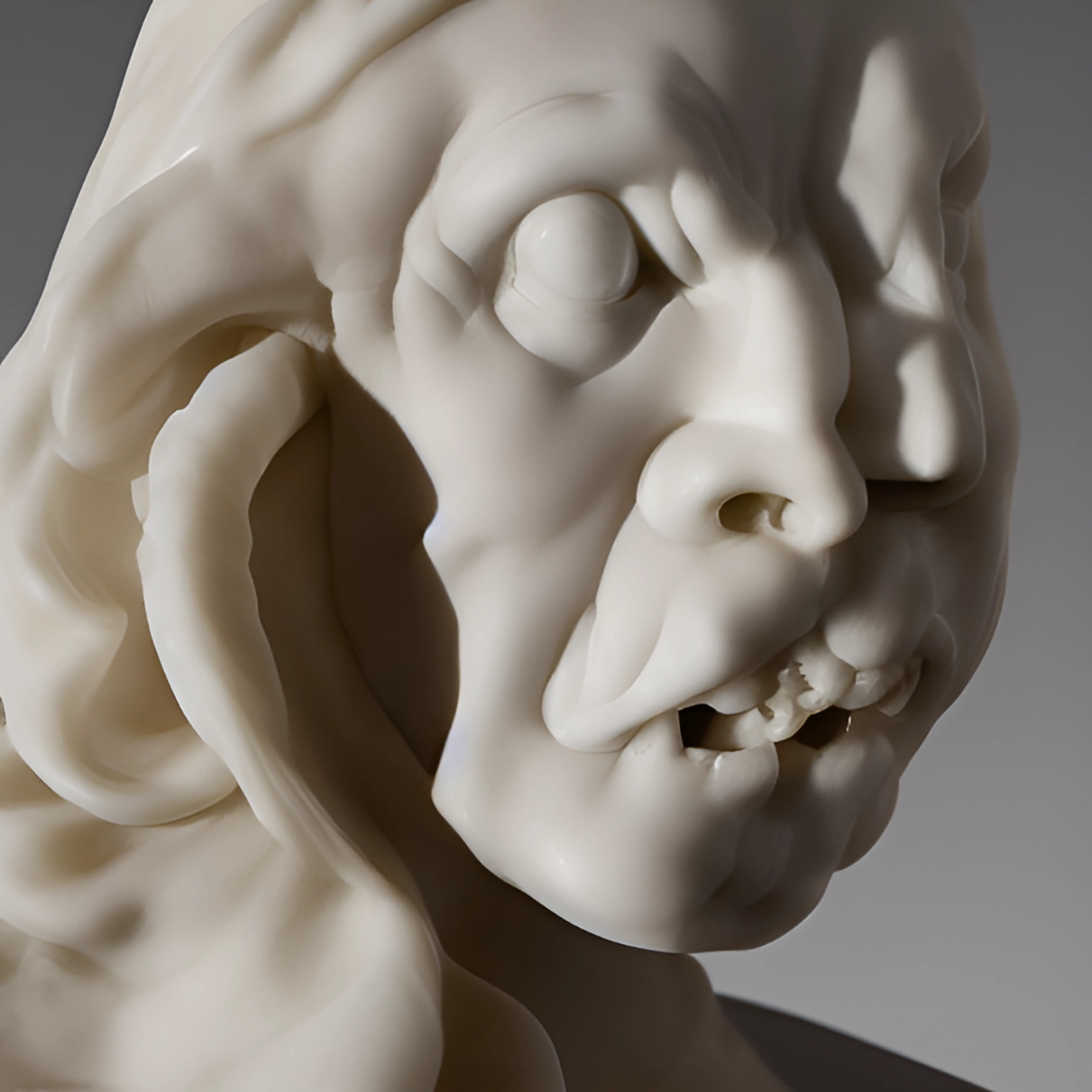
Discomfort interests me—as a form of confrontation with the image system I use. In this type of project, La Fulminante, I work with images that function as an experience or a proposal that comes close to eroticism or something that could simulate pornography. At the same time, I am interested in disgust, in the grotesque as it relates to political issues. I believe that discomfort makes an image more memorable, and in terms of communication, I think it is important for images to have the capacity to leave a mark on the viewer’s memory, to have impact.
I believe that the physical dimension—on paper—no longer has the same strength as a bond with the audience, because we are accustomed to visual saturation. In fact, this is a work that is several years old; social media was not what it is now, and audiovisual saturation was not as extreme. Today, practically nothing is uncomfortable anymore; almost everything has already been seen, and it is seen so often that very little affects us deeply.
However, I think that in my work—which is very graphic, though not in the traditional sense—the important thing is not fixed or two-dimensional images, but rather moving images and live performance. That is a very interesting space for me, where I can truly be present and act directly with the audience in a very intense and aggressive way. This happens especially in live work, where the performer’s drive is felt. I believe that this is where I most enjoy being as an artist: a space where the viewer is very close and experiences discomfort, destabilization, or the impact that a work can generate. I very much doubt that two-dimensional images can achieve that.
I do not discard two-dimensional images, but I believe my place is not there. Also, when we talk about discomfort, we are also talking about empathy: just as there are people who find these images uncomfortable or unpleasant, there are others who find them attractive, amusing, and who experience a positive reaction to them. This also speaks to a world that has been changing, and to how these kinds of images end up being accepted or enjoyed by people who think in similar ways, who feel empathy and a sense of alignment with what they see.
That piece is, in a sense, an attack. I would like it to be considered an act of disrespect, a display of audacity—something like a lack of respect toward people whom many regard with respect or fear. These are also figures who have inspired admiration for different reasons: for being heirs to an aristocracy and to elite power, for being men, for being wealthy, and, on the other hand, for being powerful, authoritarian, and complicit in serious crimes.
It primarily represents Uribe, but also Juan Manuel Santos, who at the time was Minister of Defense during the so-called “false positives”—a systematic massacre of young people from low-income backgrounds who were deceived, their futures compromised, and then murdered in order to inflate combat casualty statistics during Uribe’s presidency, between 2004 and 2010. It was a massacre in which more than 6,402 young civilians were killed by the army. Uribe and Santos were, respectively, president and minister of defense at that time.
I do not believe Santos por Vargas Lleras is on the same level as the other two, because he was never president, but he is still part of the same rancid oligarchy, which I consider to be part of the same system. However, he is not exactly the same; he appears as a third figure because, at that particular moment, there were also political debates that involved him. All of these works are, in one way or another, tied to a history. Things have changed, but when viewed from a broader historical perspective, their context becomes clearer. Right now, Uribe and these men are, in a sense, in a phase of decline, although under very different conditions than before.
The historical changes we have experienced in recent years—the advance of feminisms, left-wing movements, and the media—have also transformed the vision of reality that prevailed at that time, when there was much greater control over public opinion and the circulation of information. What was once considered “preferable” is now questioned and no longer represents what it once did.
However, historically, it cannot be denied that these figures were treated as if they deserved, symbolically, a castle or something similar, as in Plaza Bolívar—not as an homage, but as a critical marker of “warlords.” The image of the decapitated figures functions as a kind of symbolic punishment: a punishment for people who will probably never receive a real one. It operates in the symbolic realm, as an attack on figures who have been significant in the history of Colombia.
Your performances are unapologetically political. What role does rage play in your work?
Well, the anger in my work resonates more with physical actions. As such, I believe my work is based on informational matters or on reading… my work is fundamentally about research and the analysis of information to produce images and actions.
There is a great deal of reading, yes, and a lot of analysis, but the anger emerged somewhat from irritation and from very deep, very real emotions that live within me, and I think that at that moment anger surfaces more as a drive, an impulse.
That said, anger also arises from frustration and from the need for force, from saying, “this is what I do.” But in relation to anger, I honestly don’t think it is the feeling or emotion that represents the bulk of what I do. I believe my work is more about communication and about reflecting on myself, as well as analyzing my historical moment. I don’t consider it spontaneous or basic enough to reduce it to a single, simple emotion.
I do think there are many emotions involved, but I consider myself a very rational person; on the contrary, I think with a cool head. For that reason, I don’t associate my work with emotions. My work contains conceptual complexity and also complexity in the way it is made; these are not simple images, nor images conceived solely on a visual level. Yes, I also work within the realm of composition, but the strong core of my work is more closely tied to analysis, reflection, the rewriting of discourses, a relationship with codes of representation, and many complex issues.
For this reason, I don’t feel that anger is particularly important to what I do; it is not a central element in my work.
How do you see the relationship between your body and state violence?
Well, my body, in a way, analyzes what I do, and I refer to it as a weapon, as a tool of alternative communication. This means that there is a strategy, a way of handling things in which I present myself as a body that functions as a tool—not simply as an object, but as an active body, a tool of alternative communication. It is a tool for revolution in the face of state violence. I position myself from a vital place, because we are talking about violence, about a war that has undeniably left dead bodies on both sides.
There is no doubt about who holds power: the State, weapons, and the legitimacy of its discourses. But resistance has also left many dead, because many people choose to enter the war, exposing themselves to death, while at the same time being willing to kill others.
In that sense, I decided not to enter either to kill or to be killed, but rather to act as a human being willing to generate vitality, questions, and critical reflection through the use of my body. This is an aggressive body, but a manipulated one: it is not just my body, but a body that embodies characters, performs actions, constructs meaning, thinks, reads, and carries out both intellectual and physical labor. It is a body that works in multiple ways to generate impact and communicate a discourse.
Beyond that, it is a body that does many things, including reforming itself within the performance. I use it as a tool of the explicit, of exaggeration, but also as a tool of the vital—of what relates to life, energy, force, and aggression.
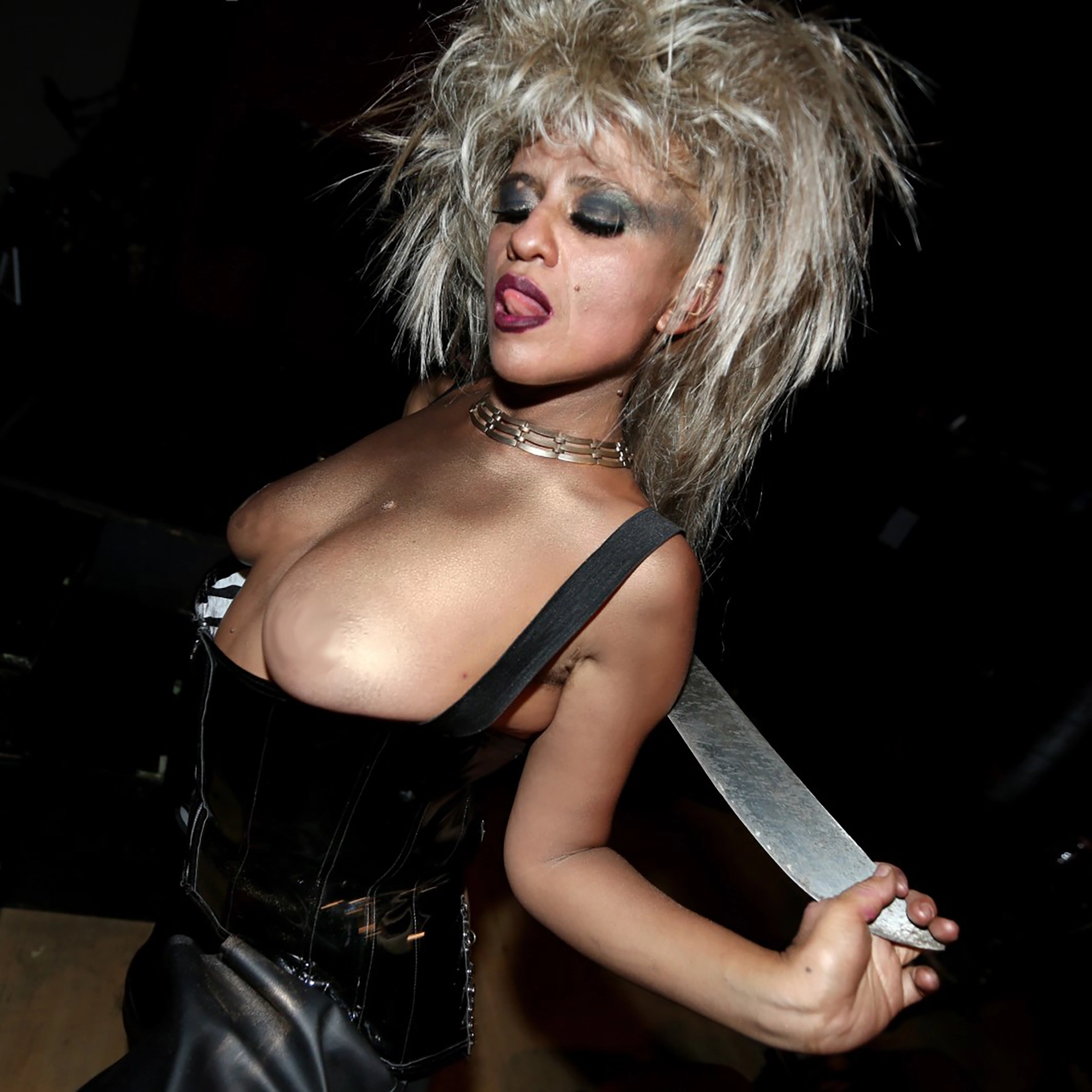
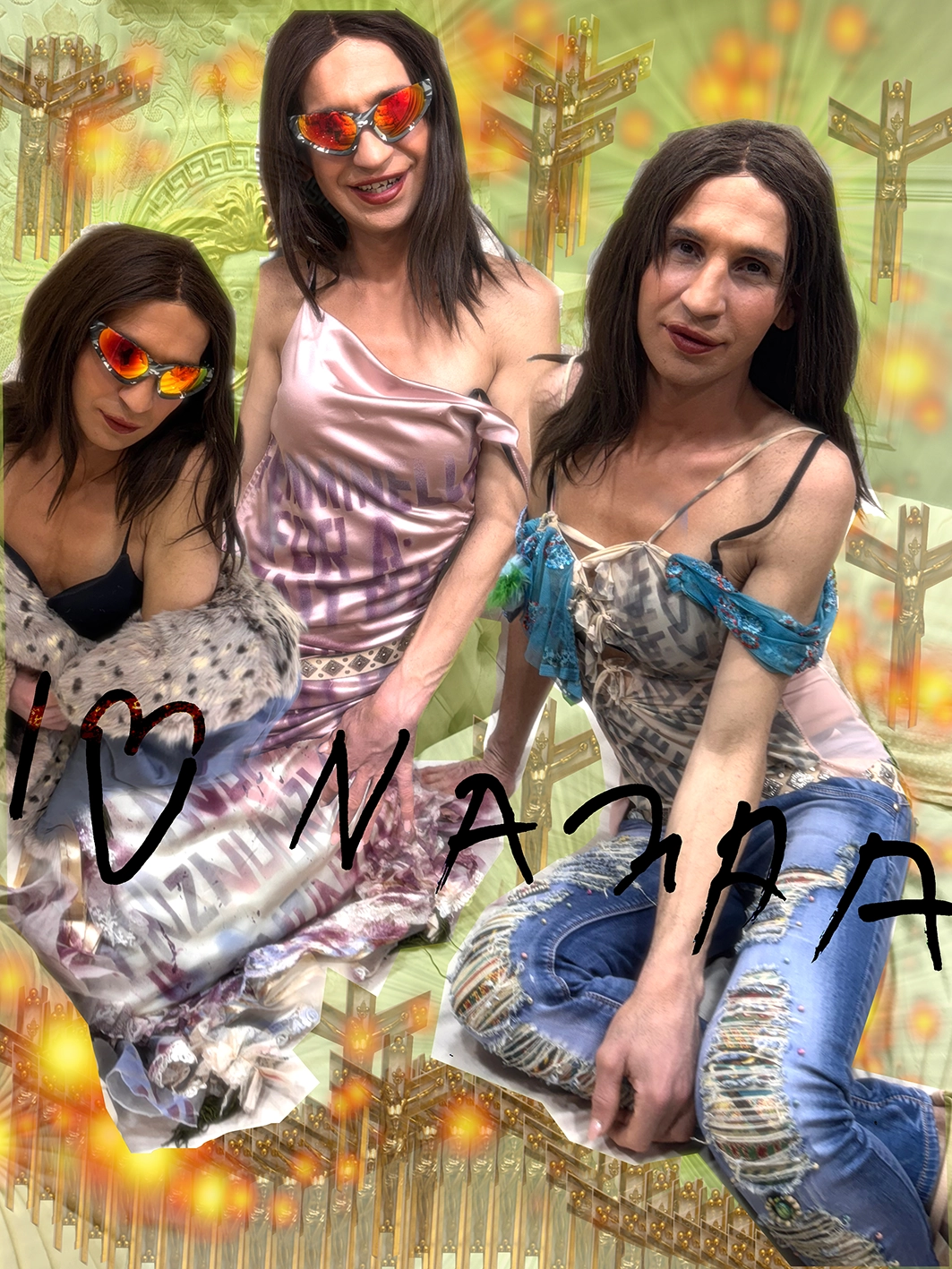
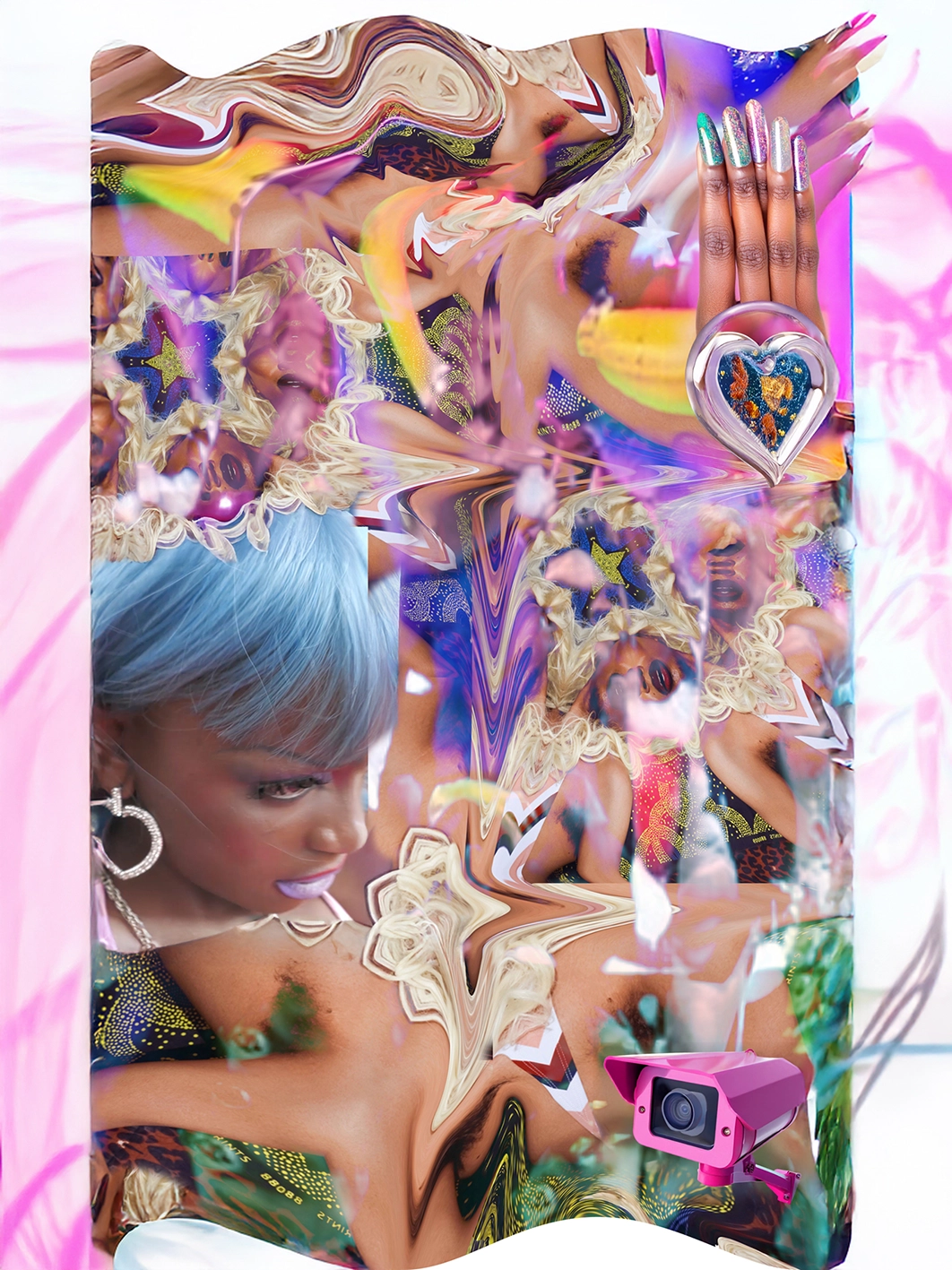
Speaking of La Fulminante, what it embodies is a form of femininity—a highly constructed femininity, not tied to simple stereotypes nor associated solely with eroticism, but something more complex, almost comic or fictional. This construction allows the body to exist in multiple ways, very graphically, through visual manipulations that appear in the image, such as video cuts or scene fragments that later become part of the moving, audiovisual work, combined with text and writing.
Then there is the live aspect, where it is me in the flesh. That body, when faced with violence, exposes itself, presents itself with great openness and obscenity. In the face of violence—where there is silencing and an attempt at immobilization—I believe that my body and the way I perform move toward action, toward doing things that are grotesque, that generate force and destabilization, from a place deeply connected to the erotic and to vitality in opposition to death.
Moreover, in the face of a masculine, white, elitist, Catholic, and hypocritical system, placing a racialized body like mine in a situation of force, crudeness, and destabilization is something that deeply attracts me. It is a way of challenging denial, hygiene, and puritanism; of confronting what seeks to prevent us from exercising our freedom and our vitality.