What kind of intimacy were you exploring in your edition for King Kong?
I’ve been interested in revealing very specific forms of intimacy in my work for many years — usually staging a kind of intimacy that is underrepresented or unseen. As a trans-masc lesbian from a working-class background in Manchester, the North of England, for me this has intersected with masculinity — whether that being the relationship between the trans-masc and butch lesbian performers in my live work, or someone who has been deemed a ‘threat’ in society coming into close relationship with audience members in an intimate way to dismantle a particular societal stigma.
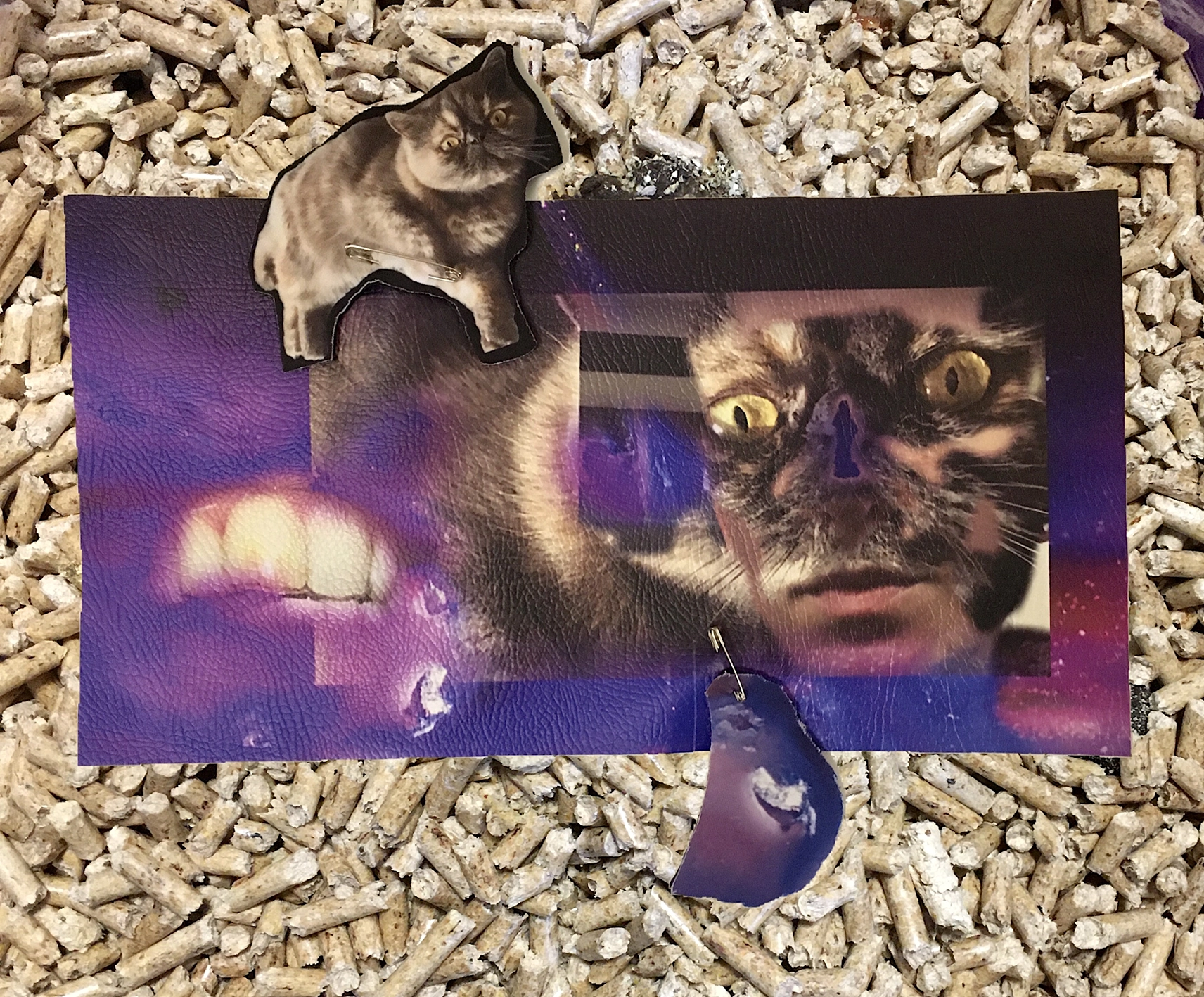
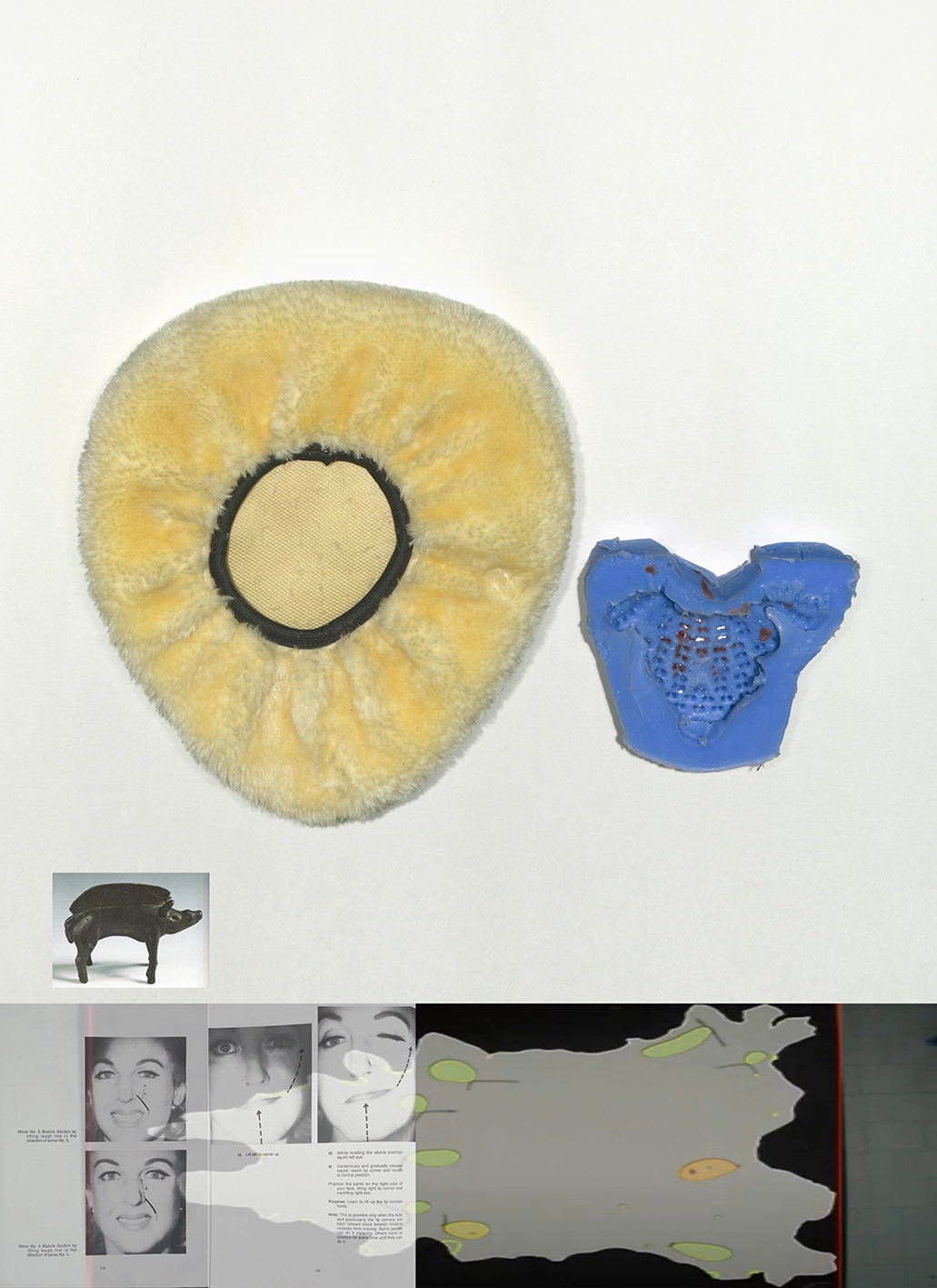
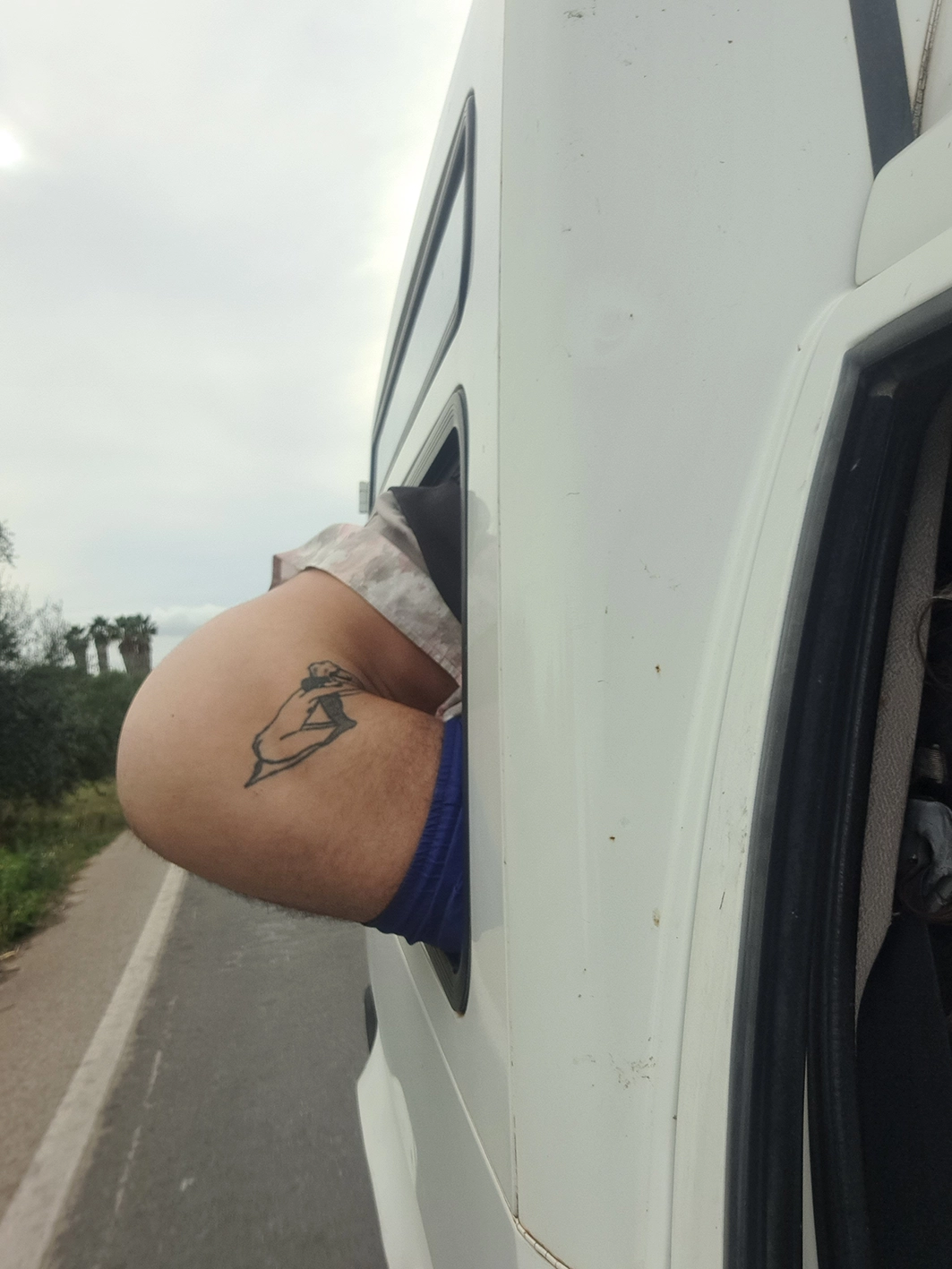
This edition, ‘Litter Tray Series, Ailuranthropy’, is taken from a short series of collage works I created relating to the desperate feeling of losing a sense of self, where a need to consume something/someone else becomes a scary place. This particular edition depicts this tragic merging with my cat, Sean. So in love and assigned a role of ‘owner’. It became a kind of case study for the way that I’m personally inclined to love; making my tendencies excruciatingly visible. The image contains a collage printed on leatherette with neoprene photographic attachments safety-pinned to the surface, then staged like a mini performance on a bed of used cat litter; abject and visceral, calling in themes of consent and ownership. The textures of the skin-like leatherette being punctured with the pins and the yellowing teeth next to Sean’s fur, her shit touching the fabric where our faces rest. Ingesting something you love and lying in the excrements. The impending threat of deep intimacy and something seen as ‘other’.
How do you choreograph desire and friction within a digital publication format?
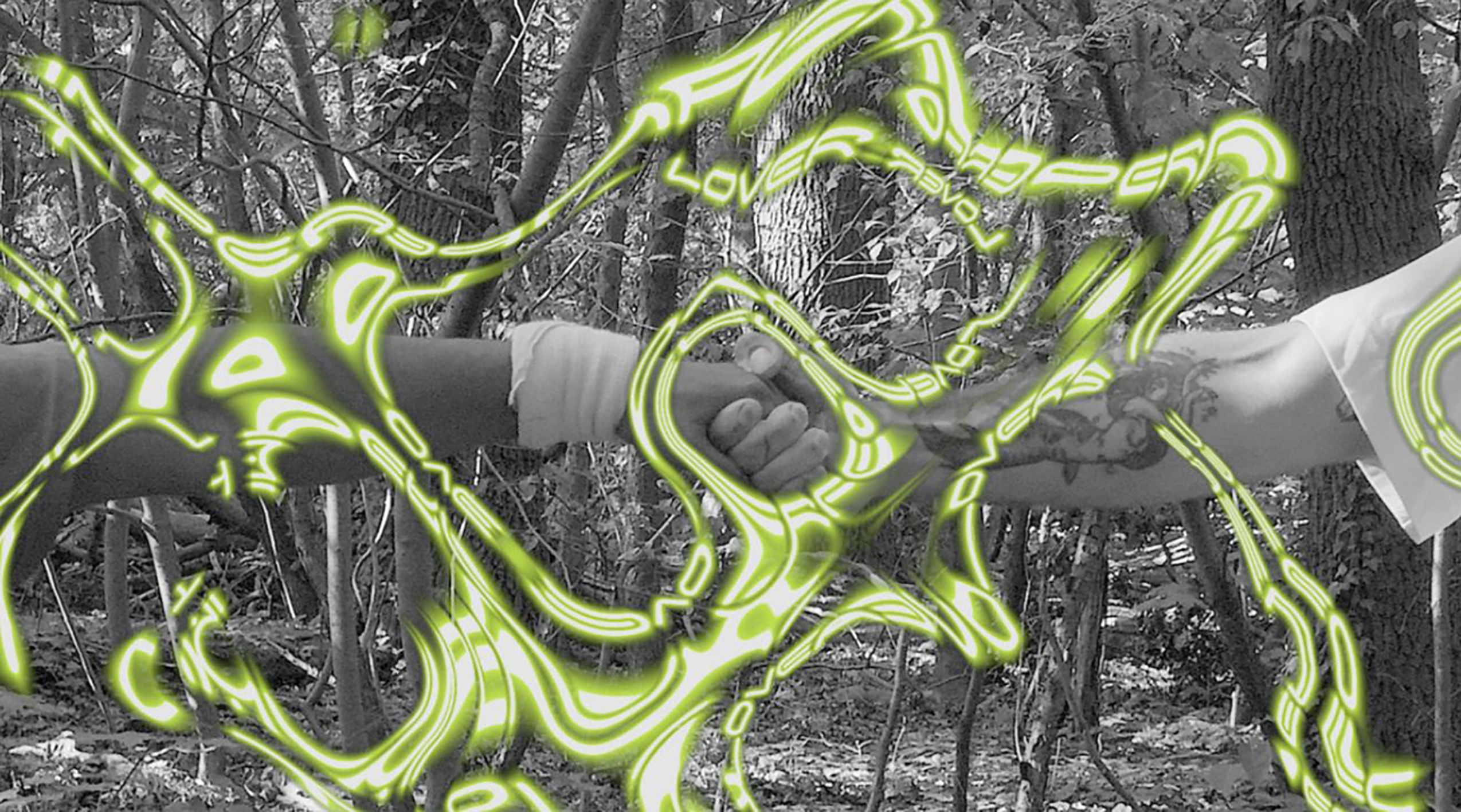
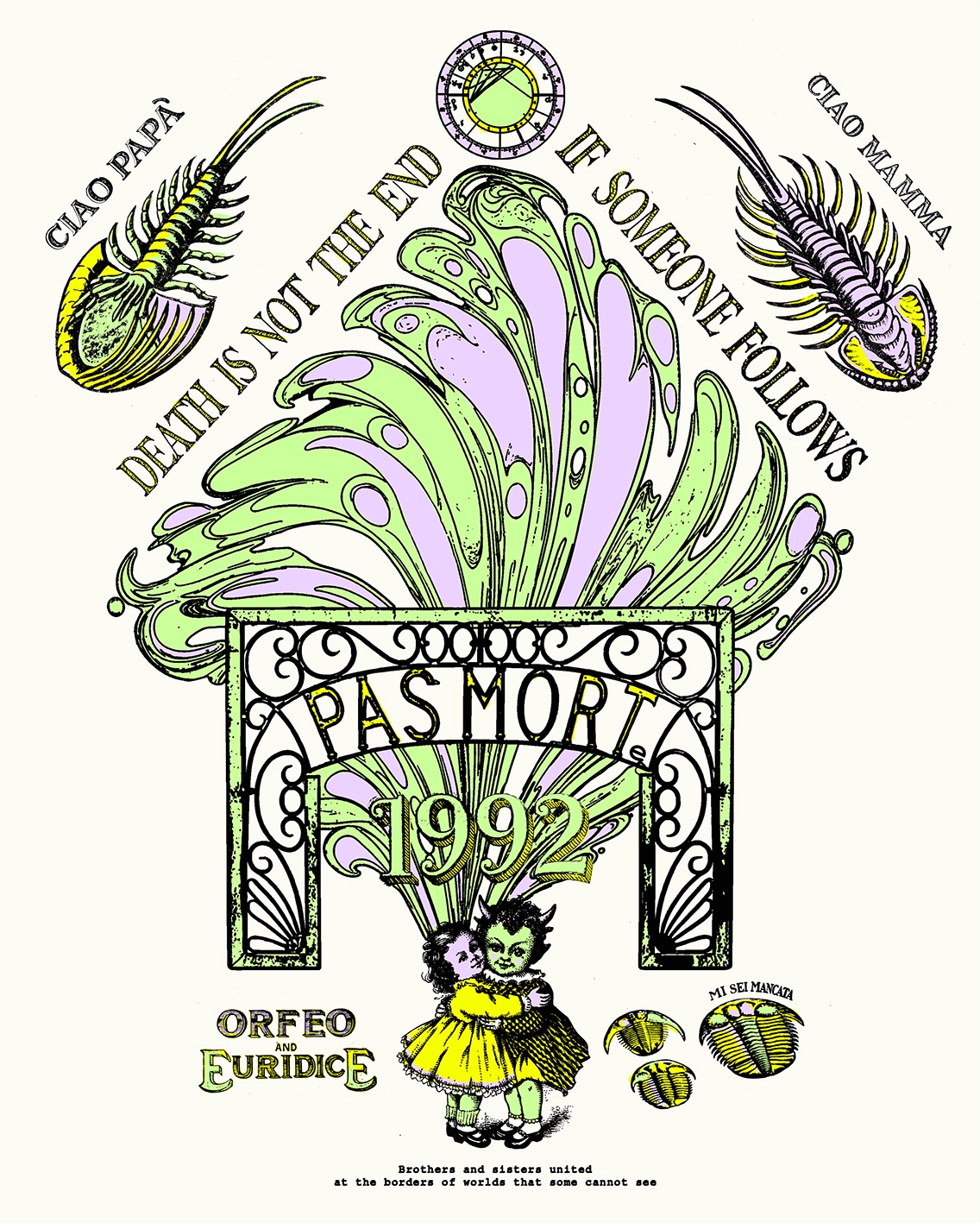
Both collage and choreography have been exciting mediums to work with ideas of desire and friction. For me collage relates a lot to choreography in its relationship with time; slowing down or manipulating the meaning-making, a means to delay. I don’t usually want the viewer or audience member to simply arrive at the conclusion immediately. In my live work I became really interested in this idea of hyper slow-motion in order to reveal something that might not be what you first assumed; about a situation, a feeling, a person, to really give time to meaning arriving and reflection simultaneously, encouraging you to stay in a more abstract, strange place for longer, resisting a rush to commodify. I work with this process as a way to unravel stereotyping or essentialist thinking, which can become very ultimate, fixed, non-consensual, and false. I think this process reveals a viewer’s own conditioned ideologies/assumptions/judgements. It’s a live experience of piecing the puzzle together from the codes provided, to stay in the strange place of trying to understand. States of friction, resistance, desire, absurdity are for me all political things to work with and mean different things to different types of people. I love this word ‘friction’, a dynamic force that resists. It appeals to choreography and movement as well as protest.
What’s your relationship to being seen or documented, and how did that shift here?
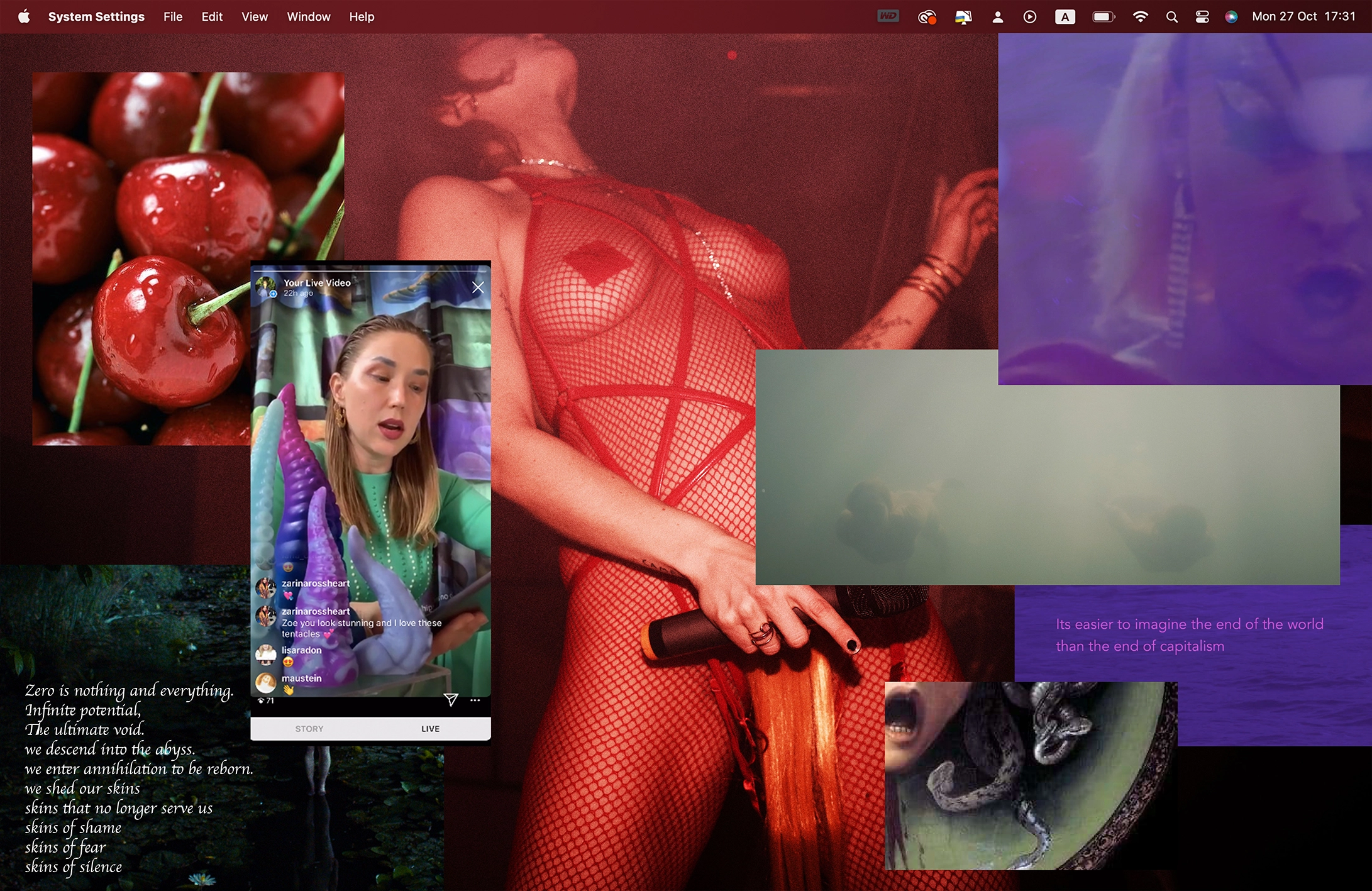
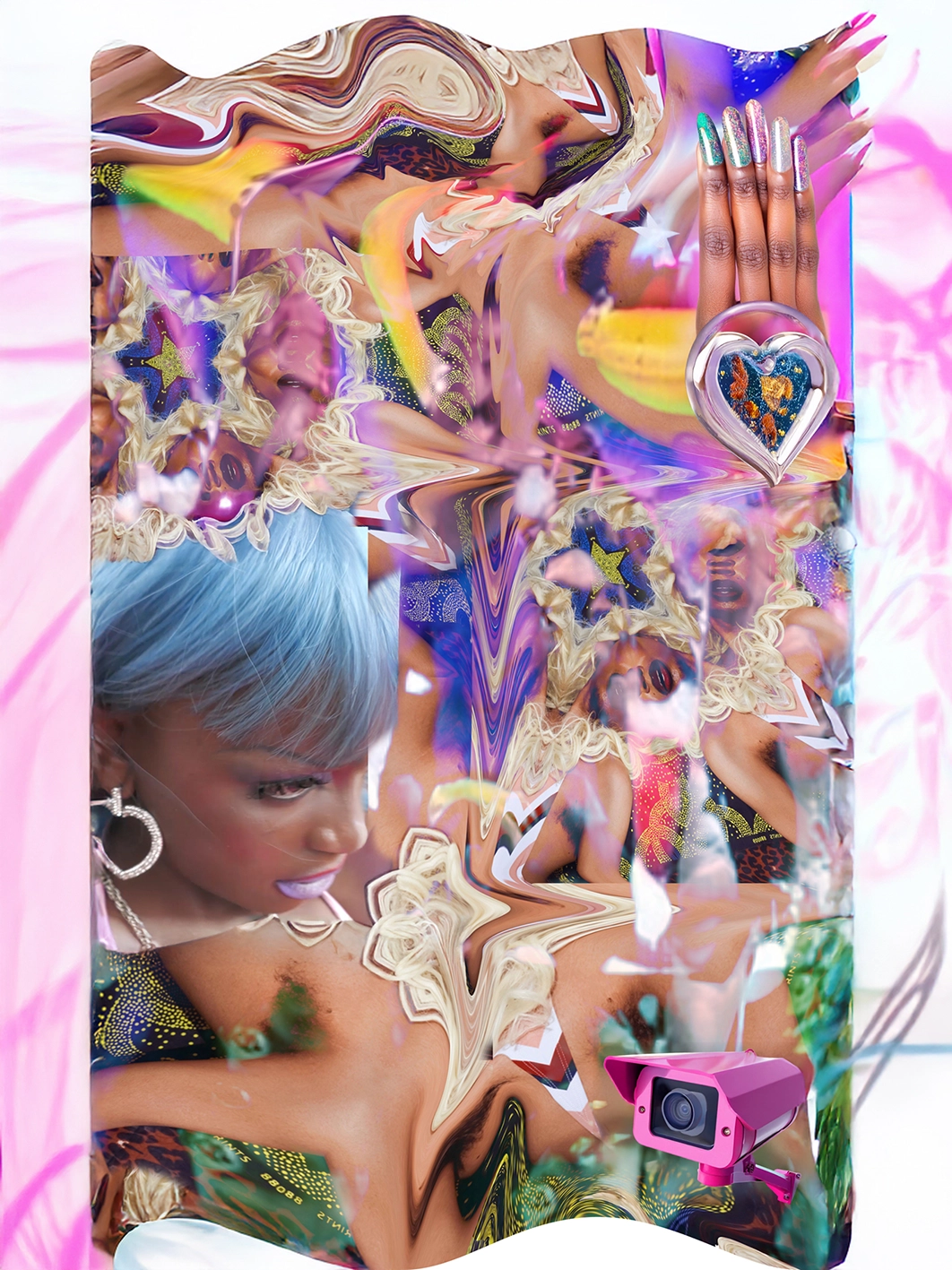
From around 2016 to 2021 I was making quite explicit performance work, mainly in collaboration with my partner Florence Peake. Our earliest performance work, Slug Horizons, began with the audience being invited to paint and decorate our vulvas, we then, naked from the waist down, slotted our bodies together in a scissoring configuration and travelled through the space on a bed of homemade lube, trying to remain connected at the crotch. It was clunky, strenuous, and inelegant, subverting how lesbian sexuality had historically been presented as well as resisting the idea of dance needing to be seamless and flowing. It was a very explosive time where we felt compelled to reveal and reclaim intimate aspects of a lesbian relationship. Alongside this I started to develop a digital collage practice that was also quite revealing of my personal life — usually my own body warped and contorted or merging with other forms like crabs and spiders — things I associated with phobic ideas and threat, projections often assigned to masc or butch lesbian bodies. I enjoyed this outlet taking a digital form where the image was being manipulated in private before being shared publicly, usually over Instagram. I think it gave me a sense of safety or control, a respite from the live work where things felt risky in the moment of being seen unfolding.
Your work often deals with queer intimacy and tension — how do you choreograph that on stage?
One of the modes I work with to deal with queer intimacy and tension in a particular way is audience participation. I’ve been interested in audience participation as a medium in itself for quite some time now, an earlier work Dykegeist (ICA, 2021) based its entire structure on individual people carrying out simple tasks with me in close proximity whilst I was dressed in spider-like appendages and an empty strap-on, making visible the absurdity of our collaborations, as well as the absurdity of stereotyping in general. I think it’s generative in thinking about one’s own complicity in societal narratives. This became even more potent for me in my new choreographic work The Joystick and The Reins which is looking into how certain people become labelled as a threat in society and how these narratives are upheld through the social fabric of our lives currently. Audience members are invited to carry out specific tasks with specific objects that all have a relationship to the idea of ‘threat’. There’s a moment where 6 audience members disappear into a side room for a rehearsal during the show, who later appear carrying shield-like objects and perform a shield choreography informed by riot police formations. I do see it as collaborative, I take the participation element very seriously, everyone is in on the message, no one is becoming the brunt of a joke, they are aware that they are representing things in ‘the scene’ in order to examine or take a closer look. The proximity of these encounters with the audience is key, the stakes feel high as they commit themselves to the tasks, to the world of the work, and everyone witnesses us muddling through the liveness of negotiation.
How does language, or its absence, function within your performances?
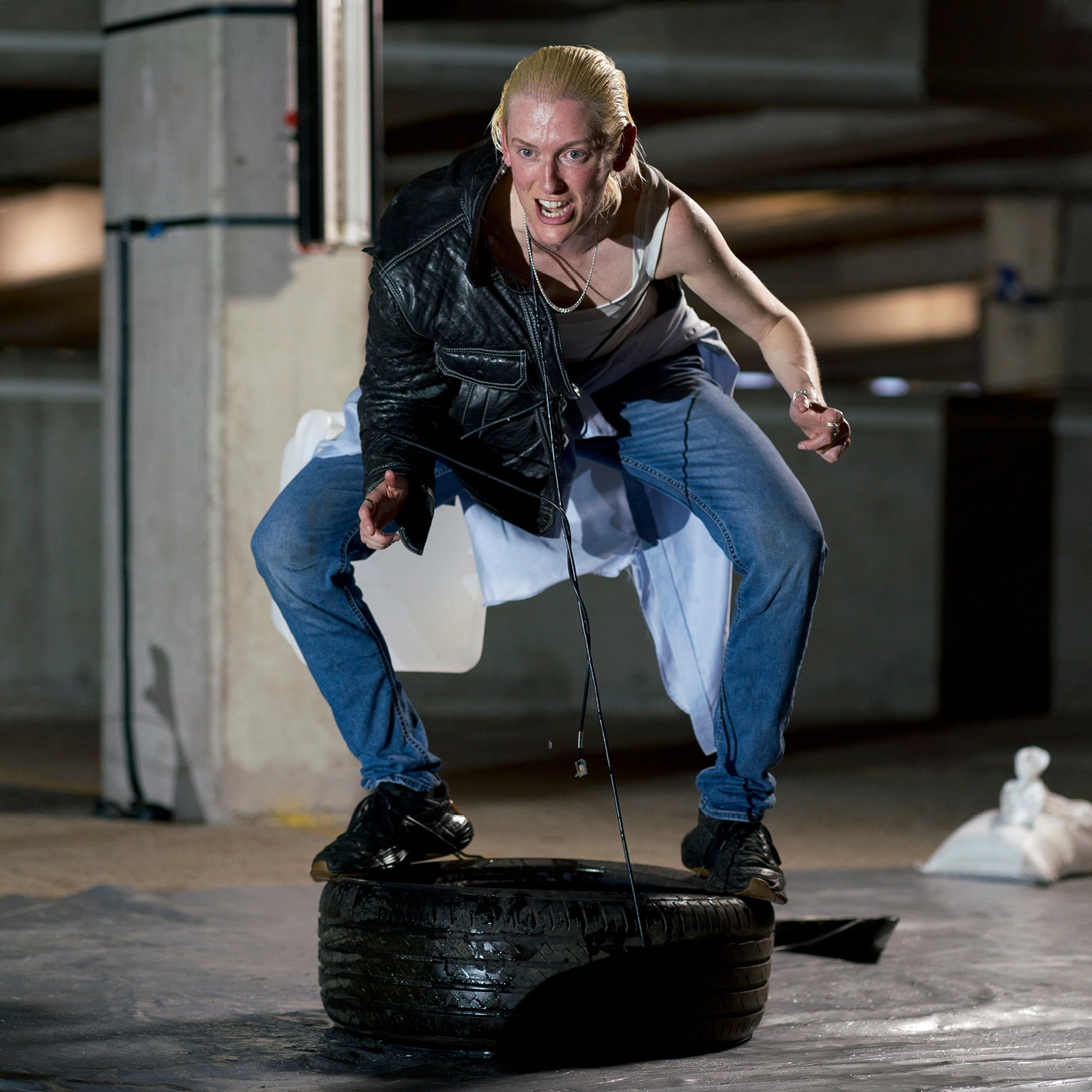
I find it inspiring to think about different forms of language and vocabularies and their legibility other than verbal. Movement as a language not only in terms of ‘dance movements forming a vocabulary’, but how everybody has multiple individual languages of expression that form kind of navigation and connection devices. For a current touring performance, Impact Driver, with a group of trans masc, butch lesbian and trans men performers, I was interested in how a group who don’t come from a dance training background might meet through physicality drawn from other places, like manual labour and welding. Everyone had training sessions in welding at the start of the project. The atmosphere, codes, masculinity, thrill, safety protocols of the real welding workshop were brought into the world of the performance as languages to connect through, languages that aren’t usually framed under ‘dance’, and languages that aren’t discriminative against body type…